Showing posts with label The Church. Show all posts

Friday, June 29, 2012

Coriolanus and King James

©2012 THE WEINSTEIN COMPANY INC.
Last night my wife and I decided to rent a movie. So we watched a few trailers and decided on a movie named Coriolanus. It looked like a fascinating story of a man that was rejected by the country he fought for, banished and ends up having to join forces with his mortal enemy. It had Ralph Fiennes (playing the main character Caius Martius Coriolanus) and Gerard Butler (playing his arch enemy Tullus Aufidius) starring as two of main characters with a great supporting cast. At the very end of the trailer a headline flashed that made it known that the movie was based on the Shakespeare play of the same name. So now I am really stoked. It looks like a good action movie with a great cast and the underpinnings of a solid story. So we rented it.

What could go wrong?

The movie was set in a modern version of Rome and the opening scenes were flashes of news reports that looked eerily similar to the recent riots in Greece. The parallels of the movie to modern day happenings make the movie look even more interesting. The first real scene has an angry mob marching on a government controlled food depot. So were are getting right into it.

What could go wrong?

Then we hit the first lines of dialogue:

Second Citizen: Before we proceed any further, hear me speak. You are all resolved rather to die than to famish?
Gathered Citizens: Resolved.
Second Citizen: First, you know Caius Martius is chief enemy to the people.
Gathered Citizens: We know it.
First Citizen: Let us kill him. And we'll have corn at our own price.
Second Citizen: We are accounted poor citizens, the patricians of good. The leanness that afflicts us, the object of our misery, our suffering, is a gain to them.
Gathered Citizens: Aye.
Second Citizen: Let us revenge this with our sticks, ere we become rakes.
First Citizen: No more talking on it. Come!

Uh oh. I'm starting to get an idea of what could go wrong. Who speaks like that? It became very difficult to follow what was going on. Further into the movie we were treated to this gem:

Tullus Aufidius: What's thy name?
Caius Martius Coriolanus: A name unmusical to the Volscians' ears, and harsh in sound to thine.
Tullus Aufidius: Say... what's thy name? Thou has a grim appearance. What's thy name?
Caius Martius Coriolanus: Know'st thou me yet?
Tullus Aufidius: I know thee not. Thy name?
Caius Martius Coriolanus: My name is Caius Martius, who hath done to thee particularly, and to all the Volsces, great hurt and mischief. Thereto witness my surname... Coriolanus. Only that name remains. The cruelty and envy of the people who have all forsook me, hath devoured the rest and suffered me by the voice of slaves, be whooped out of Rome. Now this extremity hath brought me to thy hearth. Not out of hope, mistake me not to save my life. For if I had feared death, of all men in the world I would have avoided thee. But, in mere spite, to be full quit of those my banishers, stand I before thee here. I will fight against my cankered country with the spleen of all the under fiends. But if thou dares not this, then I present my throat to thee and to thy ancient malice. Which not to cut would show thee but a fool, since I have ever followed thee with hate, and cannot live but to thy shame, unless it be to do thee service.

Don't get me wrong. Reading dialogue like this is nothing like trying to decipher it on the fly in the context of a movie. When I read it I can understand it but it isn't quite a clear as it could be. In a movie it was near impossible to understand what was actually being said. It seems silly to me to update every aspect of the movie but the dialogue. In this movie the dialogue is what really tells us what is going on. Isn't the point of a modern telling of a Shakespeare play to help modern viewers understand better?

It is the very same reason that most churches and Christians no longer use the 1611 King James version of the Bible. The whole point of modern versions is so that modern readers can better understand what the Bible is saying. But then as a church we can still get caught up using "insider" language that ends up confusing those outside of the church. That doesn't mean that we should stop using terms like justification and sanctification. What it means is that we need to be very intentional about clarifying and defining the terms that we use so that even those outside the church can easily follow our dialogue.


Movie quotes are from imdb.com


Wednesday, May 23, 2012

Tinotenda and Theresia

Famine no more

Today I would like to give a shameless plug for World Vision. My wife and I each sponsor a child through them. My wife sponsors a little girl, Theresia, in Lebanon and I have a little boy, Tinotenda, in Zimbabwe. I chose to sponsor a child in Zimbabwe because it is a high risk area for HIV/AIDS. Tinotenda is a part of the HopeChild program which seeks to help children in these high risk areas. Unfortunately many children born into these areas lose parents and are extremely vulnerable.

Over the past (almost) 8 years my wife and I have had our children changed as they either grow up or move outside of the sponsored area. The most exciting letter that we have received was when one of the children my wife sponsors was removed from the program because the family's condition had improved significantly. All you can do is thank God for the work done by World Vision and ask that the family's condition remains stable. However I wonder just how stable their condition could possibly be given that they live in a fairly unstable part of the world to begin with.

One interesting story from the World Vision blog is about a woman that has decided to start sponsoring young girls in her home country of India. Aparna Sen grew up in Calcutta and had the opportunity to further her education in America. But her heart always remained for those growing up in India:

"I wanted to sponsor a girl since I knew that girls in India, especially from poor communities, are victims of discrimination in almost every walk of life. They rarely get an opportunity for education, and many of them are married off at an early age."

Aparna sponsored Rebika and eventually Aparna and her husband, Ritwick, traveled to India to meet Rebika. What they learned was that the sponsorship of the child affects more than a single child or even a single family. Aparna and Ritwick were greeted by the whole village when they reached Rebika's home.

"I wanted to tell them that I just sponsor a single child, not the whole village — but they made me feel as if I did! Then, I learned about how World Vision works not just with children like Rebika, but also their families and the entire community to provide a support network. I was convinced then that I had made the perfect choice in supporting World Vision to carry on their exceptional work in India."

It is a great testimonial about the impact of World Vision. There are so many affected children in the world and there are just not enough sponsors to go around. With the tough economic times here at home it can be very easy to cut back on charitable giving because when we do the lights are not shut off, the car is not repossessed and the house is not foreclosed on. Yet the tough economic conditions that we face are a mere drop in the bucket compared to what others face all over the world.


Friday, March 16, 2012

Is El Paso limiting the free speech of Christians?

I came across this article last week and thought that it would be good to share. Apparently El Paso Mayor John Cook and some of the city council members decided to ignore a ballot initiative vote. The ballot initiative was voted on and passed which established a city ordinance limiting domestic partner benefits.

The action of the mayor and city council caused an uproar and led to recall petitions being circulated and signed. This led to further actions:

"The mayor subsequently sued Tom Brown Ministries, Word of Life Church of El Paso, El Pasoans for Traditional Family Values and other local citizens who circulated recall petitions. He cited a Texas election law, arguing that it prohibits churches from circulating a petition.

"While ADF attorneys have filed a separate federal suit against the law to have it declared unconstitutional on First Amendment grounds, a state judge denied Cook’s request to order the election halted.

"Then the Court of Appeals for the 8th District took up the mayor’s cause and ordered the election stopped and the petition signatures decertified. Almost immediately, El Paso District Attorney Jaime Esparza subpoenaed the petitions and convened a grand jury to proceed with possible criminal indictment of those behind the petition effort."

While I am not familiar with the Texas law that is in question I do know something regarding the Johnson Amendment of 1954. It wasn't always illegal for a church to engage in political speech. And technically on a federal level it is still not illegal. The only limit is a loss of tax exempt status if a church or other 501(c)(3) organization actively engages in political campaigning for or against a particular candidate. The actions of the churches circulating the recall petitions may violate the IRS tax code in question. But should they be considered criminal in nature?

That is the question that is apparently going to be decided surrounding the Texas election law and may have serious ramifications on what a church can and cannot say.

Thursday, March 15, 2012

I love the hypocritical church

I have been writing about the church quite a bit lately and in doing so I find that it has created an internal tension. There is tension in saying that the church is made up of the individual people but then writing in a theoretical way that seems to view the church as an organization rather than as real people. Yes it is both things...sort of. But it becomes easy to speak of the church in an idealized way. I have spoken about how a church should be and let's face it–no church will ever live up to that perfect standard. And this isn't due to the nature of the church. It isn't due to an inherent problem with the church. At least is isn't from an organizational or structural standpoint. Rather the church is an inherently flawed organization because the individual people that make up the church are inherently flawed.

And that fact cannot be lost whenever we engage in any discussion of the church.

Every church that I have ever been involved in has been filled with people that are selfish, hypocritical, liars, hypocritical, divisive, hypocritical, thieves, hypocritical, sexually impure, hypocritical, angry, hypocritical, calous, hypocritical, decietful, hypocritical, self-righteous and hypocritical. Did I mention that the church is filled with hypocrites?

And the good news is that there is always room for one more hypocrite.

We are all sinners. We all have flaws. And while the idealized church should be perfect it won't ever be that way in this life. A good church is not a perfect church. A good church is an imperfect church that knows that it is imperfect and still tries to love one another anyway. Paul wrote a couple of letters to the very imperfect church at Corinth. You could make quite the laundry list from those two letters regarding all of the things that the Corinthians did wrong. But Paul said something very interesting in 2 Corinthians 2:5-11:

"Now if anyone has caused pain, he has caused it not to me, but in some measure-not to put it too severely-to all of you. For such a one, this punishment by the majority is enough, so you should rather turn to forgive and comfort him, or he may be overwhelmed by excessive sorrow. So I beg you to reaffirm your love for him. For this is why I wrote, that I might test you and know whether you are obedient in everything. Anyone whom you forgive, I also forgive. Indeed, what I have forgiven, if I have forgiven anything, has been for your sake in the presence of Christ, so that we would not be outwitted by Satan; for we are not ignorant of his designs."

Paul wrote the Corinthians and asked them to forgive someone that had repented of his sins. Churches have been filled with imperfect people from the very beginning. They have also been called to forgive those imperfections as well. Yes, every church I have ever been involved with has been filled with all kinds of unsavory and hypocritical characters. And fortunately every church I have ever been involved with has also been forgiving of me for being one of those unsavory and hypocritical characters.

And because the hypocritical church has love me–a hypocrite–is why I love the hypocritical church.


Previous Posts on the Church:

What is the Church?

Why do we need the Church?

Authority and the Church

Authority and the Church Part 2

Final Thoughts on Authority and the Church


Scripture quotations are from The Holy Bible, English Standard Version® (ESV®), copyright © 2001 by Crossway, a publishing ministry of Good News Publishers. Used by permission. All rights reserved.


Monday, March 12, 2012

Why do we need the Church?

A few weeks ago I started to look at the Church. I started off by defining the Church:

"The Church–quite simply–is the Body of Christ. It is the fullness of all those that believe in and put their faith in Jesus Christ as their savior, meaning all such people for all time."

Just a quick note about the terminology that I am going to use in this post. I am differentiating between the Church and the church. When I use the term Church with a capital "C" I am referring to the overall Body of Christ as defined above. When I use church with a lower-case "c" I am referring to the organization of a local congregation or even larger denomination. This is to say that there is a Spiritual Church and an organizational church.

What is important to keep in mind is that we do not put ourselves into the Body of Christ; we do not put ourselves into the Church. It is God, through the work of the Holy Spirit that we are placed into the Church. As Paul says in 1 Corinthians 12:13 being a part of the Church is not an option for us:

"For in one Spirit we were all baptized into one body–Jews or Greeks, slaves or free–and all were made to drink of one Spirit."

If we are placed into the global Church by God does that mean that we are required to be a part of a local congregation? In other words can someone be a Christian and not go to a church on a regular basis?

While there is no "church membership" requirement, I believe that Paul's full use of the body metaphor tells us something. I think that it means that Paul never envisioned individual Christians living apart from one another and not being an active member of a local church. The author of Hebrews echoes the same sentiment in 10:24-25:

"And let us consider how to stir one another to love and good works, not neglecting to meet together, as is the habit of some, but encouraging one another, and all the more as you see the Day drawing near."

I know that I am covering much of the same ground that I covered previously. But I think that it is essential to reiterate the fact that we are supposed to meet together as a local congregation and we are to function as a body. It can be very easy to condemn those that do not regularly attend church and to ignore when we are not functioning as a healthy body should. Quite simply this is due to the fact that it is much easier to see when someone is not physically in the building. It is much harder to see when there is a problem within the body.

When I start to get a headache and a sore throat I will often say that I am getting sick. In reality I am not getting sick; I am already sick. Once symptoms of an illness start to appear it means that the illness has already taken root.

When we meet together we are to encourage one another to love and good works. When these things aren't happening on a regular basis then we are seeing the early signs of an illness within the body. If left unchecked then the question of "Why do we need the church?" starts to take on a whole new meaning.


Thursday, March 08, 2012

Pray for Nigeria

I live in the United States where I live a persecution free life. Crimes against Christians in America are very minimal when looked at in the grand scheme of life. I have posted (here and here) on the topics of how the civil liberties of Christians are being debated in the U.S. Court system before. These things are so minor compared to the lives that Christians live elsewhere in the world. Christianity in the United States of America does not really cost me anything and it can be very easy to forget that. This doesn't mean that we ignore the issues we face here. It means that we cannot forget–as it can so easily be done–our brothers and sisters in Christ that face life and death struggles. It means that we need to do something about it.

I came across an article about the persecution of Christians the other day. To be perfectly honest it was the type of article that I would usually skim. I would think about the situation being awful and say a quick prayer for those suffering. But this article caught my eye. It was about Nigeria. My wife was born in Nigeria and I have often thought about how it would be nice to take a trip to see where she was born. I have even taken time to find the small little town in which she was born. The push pin on the map below is her birth town of Onyadama.

While her being born in Nigeria brings this story a little closer to home it is still so far away geographically, culturally and politically:

"Reports coming out of Nigeria over the past several days show that the group whose name means 'Western education is evil' is launching a new terror campaign aimed at killing Christians and Jews in northern Nigeria.

"Human-rights group International Christian Concern’s Jonathan Racho confirms the reports and says the news is 'alarming.'

"'The reports indicate that members of Boko Haram recently declared a war on Christians in northern Nigeria. The group vowed to eradicate Christians from certain areas in Nigeria,' Racho said.

"'The spokesman for the group (Boko Haram) say the group will launch a number of attacks targeting Christians,' Racho said. 'So there are alarming developments even as we speak.'

"Estimates put the casualties in Boko Haram’s campaign at more than 100 dead since Christmas."

Prayer is a great first start but there are other avenues that are available. While organizations do need donations in order to be able to advocate for the persecuted; we can also put pressure on our politicians to put pressure on Nigeria to protect those that are being persecuted. We are the church and we have a duty to do whatever we can to protect our fellow Christians whether they live next door or around the world.


Further action:

International Christian Concern

Voice of the Martyrs


Wednesday, March 07, 2012

Final Thoughts on Authority and the Church

The word "submit" may be the most emotionally charged word in the Bible. And this emotional charge makes discussions of certain verses very difficult. It can be very easy to have a preconception of what a person is saying whenever there is a discussion around verses that have the word "submit" in them. I understood that this would be the case when looking at the authority in the church and the command to submit to our leaders found in Hebrews 13:17.

I think that Justin Taylor's summary of a John Piper sermon on submission is helpful. Dr. Piper's sermon is based on 1 Peter 3:1-7 and is specifically regarding submission between husband and wife. But Mr. Taylor's summary also applies when it comes to submitting to church leadership. Briefly the main points adapted for church leadership are:

  1. Submission does not mean agreeing with everything your Elders say.
  2. Submission does not mean leaving your brain or your will at the front door of the church.
  3. Submission does not mean you avoid holding your Elders accountable when necessary.
  4. Submission does not mean putting the will of the Elders before the will of Christ.
  5. Submission does not mean that you get your spiritual strength or faith from your Elders.
  6. Submission does not mean that you should fear your Elders.

Biblical submission is something that we are told to do willingly. Yes that seems like an oxymoron. How can we do something willingly if we are told to do it. But that is always the case with God. He allows us to choose between being obedient and being disobedient. Of course there are very different consequences for the two. Last week I shared some of the qualifications for an Elder. I also shared how the motivation for being a leader is important. Someone should never be an Elder for selfish gain but rather they should be willingly serving God. But what does that look like? What does it look like for an Elder to be willingly serving God?

Jesus gave us a great example in John 13. Jesus is eating what we now call the Last Supper and he knows that he is going to suffer and die on the cross for us. Even though Jesus was already on his way to paying the ultimate price for us, he paused and did something that his disciples thought was well beneath him:

"Now before the Feast of the Passover, when Jesus knew that his hour had come to depart out of this world to the Father, having loved his own who were in the world, he loved them to the end. During supper, when the devil had already put it into the heart of Judas Iscariot, Simon's son, to betray him, Jesus, knowing that the Father had given all things into his hands, and that he had come from God and was going back to God, rose from supper. He laid aside his outer garments, and taking a towel, tied it around his waist. Then he poured water into a basin and began to wash the disciples' feet and to wipe them with the towel that was wrapped around him. He came to Simon Peter, who said to him, 'Lord, do you wash my feet?' Jesus answered him, 'What I am doing you do not understand now, but afterward you will understand.' Peter said to him, 'You shall never wash my feet.' Jesus answered him, 'If I do not wash you, you have no share with me.' Simon Peter said to him, 'Lord, not my feet only but also my hands and my head!' Jesus said to him, 'The one who has bathed does not need to wash, except for his feet, but is completely clean. And you are clean, but not every one of you.' For he knew who was to betray him; that was why he said, 'Not all of you are clean.'

"When he had washed their feet and put on his outer garments and resumed his place, he said to them, 'Do you understand what I have done to you? You call me Teacher and Lord, and you are right, for so I am. If I then, your Lord and Teacher, have washed your feet, you also ought to wash one another's feet. For I have given you an example, that you also should do just as I have done to you. Truly, truly, I say to you, a servant is not greater than his master, nor is a messenger greater than the one who sent him. If you know these things, blessed are you if you do them.'"

Jesus bending down and washing the feet of the disciples was an act of very humble service. While I am not saying that the Elders need to literally wash the feet of the church they should be very willing to perform other acts of service for the people of the church. If there is ever a need within the church the Elders are the ones that should be trying to figure out how best to take care of that need. But there is always the risk that we respond to the Elders the same way that Peter responded to Christ. The Elders are not there to serve our every need and desire.

Submitting to our Elders is a two way street. The Elders need to be people worthy of submitting to and congregation needs to be people that allow the Elders to serve joyfully.


Scripture quotations are from The Holy Bible, English Standard Version® (ESV®), copyright © 2001 by Crossway, a publishing ministry of Good News Publishers. Used by permission. All rights reserved.


Thursday, March 01, 2012

Authority and the Church Part 2

Yesterday in my post about the source of authority in the church I stated:

"Church leadership does not follow the same exact pattern as our government. Church leaders are not answerable to the people of the church in the same exact way. (This doesn't mean that the Elders are not subject to church discipline like everyone else in the church.) What it does mean is that we run into problems when we start picking our church leaders because we like the way that they run the church. Rather the questions that we should be asking when we choose leaders is whether or not they meet the Biblical requirements for church leadership and whether or not they are going to do a good job leading us in the ways of God. We must remember that because we are sinful human beings that we may not always like it when the Elders do a good job of leading us in the ways of God. And that is not a good reason to challenge their authority."

One of the more common and well known passages about the Biblical requirements for Elder come from Paul in 1 Timothy 3:

"The saying is trustworthy: If anyone aspires to the office of overseer, he desires a noble task. Therefore an overseer must be above reproach, the husband of one wife, sober-minded, self-controlled, respectable, hospitable, able to teach, not a drunkard, not violent but gentle, not quarrelsome, not a lover of money. He must manage his own household well, with all dignity keeping his children submissive, for if someone does not know how to manage his own household, how will he care for God's church? He must not be a recent convert, or he may become puffed up with conceit and fall into the condemnation of the devil. Moreover, he must be well thought of by outsiders, so that he may not fall into disgrace, into a snare of the devil."

Paul gives a slightly different list of requirements in Titus 1:

"This is why I left you in Crete, so that you might put what remained into order, and appoint elders in every town as I directed you–if anyone is above reproach, the husband of one wife, and his children are believers and not open to the charge of debauchery or insubordination. For an overseer, as God's steward, must be above reproach. He must not be arrogant or quick-tempered or a drunkard or violent or greedy for gain, but hospitable, a lover of good, self-controlled, upright, holy, and disciplined. He must hold firm to the trustworthy word as taught, so that he may be able to give instruction in sound doctrine and also to rebuke those who contradict it."

There is a third passage that I would also like to bring to mind. 1 Peter 5:1-5 says:

"So I exhort the elders among you, as a fellow elder and a witness of the sufferings of Christ, as well as a partaker in the glory that is going to be revealed: shepherd the flock of God that is among you, exercising oversight, not under compulsion, but willingly, as God would have you; not for shameful gain, but eagerly; not domineering over those in your charge, but being examples to the flock. And when the chief Shepherd appears, you will receive the unfading crown of glory. Likewise, you who are younger, be subject to the elders. Clothe yourselves, all of you, with humility toward one another, for 'God opposes the proud but gives grace to the humble.'"

This third passage is not a list of qualifications per se. But it does speak to how we know whether or not an elder is doing a good job in leading us in the ways of God. The Elders should be someone that is in a position of leadership because they are willingly following God and not because the nominating committee has done a good job of convincing them to serve. An Elder also needs to have the right motivation for serving. Being in a position of authority can be very attractive for the wrong reasons. Peter tells us that Elders should not be looking for "shameful gain." And while is a warning against "doing it for the money" there are many other ways to realize a "shameful gain" that have nothing to do with money.

There are all sorts of glory and accolades that come with being in a position of authority and we can lust after those in the same exact way we lust after money. When we lust after the glory that we receive from men we can very easily fall into the trap of domineering over others. But the glory that Peter tells us to seek after is not the glory that we receive from men but rather the glory that we receive from God for having done a good and Godly job.

When we run into an Elder that is obviously doing their job for selfish reasons and is domineering over the church, then that Elder is subject to the same discipline as every other Christian. This does not mean that we can openly and disrespectfully challenge the authority of every Elder we disagree with. We are still bound by the discipline rules that Christ laid out in Matthew 18:15-20. When an Elder truly meets the requirements for being an Elder, they should be easily approachable when you have an issue. It might be hard to muster the courage to talk to them but your conversation should be well worth the effort.


Scripture quotations are from The Holy Bible, English Standard Version® (ESV®), copyright © 2001 by Crossway, a publishing ministry of Good News Publishers. Used by permission. All rights reserved.


Wednesday, February 29, 2012

Authority and the Church

We as Americans have a funny relationship with authority. Our society maintains–or at least attempts to maintain–a balance between rule of law and personal liberty. The Declaration of Independence grasps at this balance when it says:

"We hold these truths to be self-evident, that all men are created equal, that they are endowed by their Creator with certain unalienable Rights, that among these are Life, Liberty and the pursuit of Happiness.--That to secure these rights, Governments are instituted among Men, deriving their just powers from the consent of the governed, --That whenever any Form of Government becomes destructive of these ends, it is the Right of the People to alter or to abolish it, and to institute new Government, laying its foundation on such principles and organizing its powers in such form, as to them shall seem most likely to effect their Safety and Happiness."

Our nation was founded on the very principle that the authority of the government infringing on personal liberty is an actionable offense. It states that it is better to disband and reform the government rather than take away our personal liberty. This principle is very evident in our society today. We see it even going beyond the government infringing on our personal liberty. It extends to disputes between individuals taking away the personal liberty of another. Most if not all cases of civil rights violations are situations of one person violating someones "Life, Liberty [or] the pursuit of Happiness." I don't share this to debate the validity of how our nation is structured or the legitimacy of American Individualism. I share it because the nature of the church is at odds with the foundational worldview that is inherent in how our society operates.

Governmental leaders–as viewed from this societal perspective–gain their authority from the governed. In other words the theory is that those people in charge only get their authority because we the people say they can have it. And those people in charge can only do what we the people say they can do. If we don't like the way things are going in the country then we can vote new people into authority in order to change the laws that we don't like. So–again the theory is–that we the people in essence control the authority.

But the church is different; or at least is should be different. Yesterday I shared how the church is really the Body of Christ and that God requires us to be a part of that Body. It is important to remember that while we as the church are the Body of Christ, Christ is the head of the Church. He is the ultimate source of authority within the chuch and not the people of the church. I think that this is easy to at least understand in principle even if it is not always easy to live out. But if Christ is the ultimate source of authority then this also has consequences for the leadership of the church.

The Elders within the church do not get their authority from the people of the church. The author of Hebrews says:

"Obey your leaders and submit to them, for they are keeping watch over your souls, as those who will have to give an account. Let them do this with joy and not with groaning, for that would be of no advantage to you."

Just as governmental leaders are answerable to the people that give them their authority, the church leaders are answerable to the one that gives them their authority. Those leaders will have to give an account for their actions to God. They will also be held accountable for the actions of the church. And because of this we are told to submit to their authority. This means that there are two eternal consequences for the leaders and people of the church. The first is that the Elders of the church will have to answer to God for any abuse of power. The second is that we will all have to answer to God for any insubordination to the authorty of the leaders of the church.

Church leadership does not follow the same exact pattern as our government. Church leaders are not answerable to the people of the church in the same exact way. (This doesn't mean that the Elders are not subject to church discipline like everyone else in the church.) What it does mean is that we run into problems when we start picking our church leaders because we like the way that they run the church. Rather the questions that we should be asking when we choose leaders is whether or not they meet the Biblical requirements for church leadership and whether or not they are going to do a good job leading us in the ways of God. We must remember that because we are sinful human beings that we may not always like it when the Elders do a good job of leading us in the ways of God. And that is not a good reason to challenge their authority.


Scripture quotations are from The Holy Bible, English Standard Version® (ESV®), copyright © 2001 by Crossway, a publishing ministry of Good News Publishers. Used by permission. All rights reserved.

Tuesday, February 28, 2012

What is the Church?

My Church

It is so common to speak of the church as an inanimate object. We say that we are going to church, having a meeting at the church or even needing to clean the church. We can hear a great message at church…at least we do if we attend church. We may even share with others how beautiful church was this past week. When we find a church that we like then we may decide to become members of that particular church. And that is where the real problems start. At least from the perspective of defining what the church really is. We can refer to the church as a physical location to which we go, a physical object or building, an event that we attend and an organization where we can become members. But the church is so much more than that.

The Church–quite simply–is the Body of Christ. It is the fullness of all those that believe in and put their faith in Jesus Christ as their savior, meaning all such people for all time. In that sense the Church is timeless, which I find to be a fascinating concept. My default way of thinking tends to only include those that I actually see. It can be easy enough for me to forget about those out of my sight and it is even easier for me to forget those that are out of my time. Unfortunately we may not have such an easy time trying to determine which of those are actually a part of the Body of Christ.

If someone professes faith in Jesus Christ and is willing to be (or has been) baptized in the name of the Father, the Son and the Spirit, then that person is a part of the Body of Christ. And in the same way, when we put our faith in Jesus Christ we need to realize that we are now considered a part of the Body of Christ. The work of becoming a part of the Body of Christ is not something that we do on our own but rather it is the Holy Spirit that does so:

"For just as the body is one and has many members, and all the members of the body, though many, are one body, so it is with Christ. For in one Spirit we were all baptized into one body-Jews or Greeks, slaves or free-and all were made to drink of one Spirit. For the body does not consist of one member but of many."

What Paul is saying in this passage is that when we accept Christ as our savior we are baptized by the Spirit into the Body of Christ. If the Church is the Body of Christ then by default when we become a part of the Body of Christ we have also become members within the Church. And if the Church is the Body of Christ then we must live as a body. Paul goes on to say:

"If the foot should say, 'Because I am not a hand, I do not belong to the body,' that would not make it any less a part of the body. And if the ear should say, 'Because I am not an eye, I do not belong to the body,' that would not make it any less a part of the body. If the whole body were an eye, where would be the sense of hearing? If the whole body were an ear, where would be the sense of smell? But as it is, God arranged the members in the body, each one of them, as he chose. If all were a single member, where would the body be? As it is, there are many parts, yet one body.

"The eye cannot say to the hand, 'I have no need of you,' nor again the head to the feet, 'I have no need of you.' On the contrary, the parts of the body that seem to be weaker are indispensable, and on those parts of the body that we think less honorable we bestow the greater honor, and our unpresentable parts are treated with greater modesty, which our more presentable parts do not require. But God has so composed the body, giving greater honor to the part that lacked it, that there may be no division in the body, but that the members may have the same care for one another. If one member suffers, all suffer together; if one member is honored, all rejoice together.

"Now you are the body of Christ and individually members of it."

Paul does not mean that we are supposed to live as a body in a ideological or theoretical way. He means that we are supposed to live as a body in a very real sense. This means that we are supposed to function as a body. We cannot live as a body apart from other Christians. We cannot say that we have no need for the Church. We cannot follow Christ and reject his Body at the same time. If we are to be obedient to Christ we must be a part of the Church and this also means that we must be a part of a local congregation.


Scripture quotations are from The Holy Bible, English Standard Version® (ESV®), copyright © 2001 by Crossway, a publishing ministry of Good News Publishers. Used by permission. All rights reserved.


Wednesday, February 08, 2012

Religious Freedom Revisited

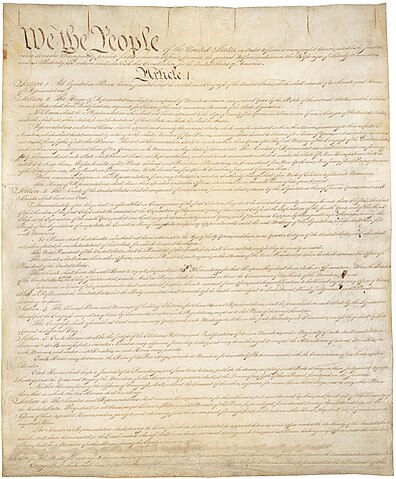
U.S. Constitution

Last month I shared an article about the ruling in the Hosanna-Tabor v. EEOC case that was before the United States Supreme Court. In that particular case the Supreme Court ruled that a church had the freedom to fire an unwanted minister even if it was only for religious reasons. Those reasons are usually not valid reasons to be fired for a job but the Court realized that there is an exemption from those rules when it came to ministers in a church.

Justice Roberts wrote:

"We agree that there is such a ministerial exception. Requiring a church to accept or retain an unwanted minister, or punishing a church for failing to do so, intrudes upon more than a mere employment decision. Such action interferes with the internal governance of the church, depriving the church of control over the selection of those who will personify its beliefs."

It may seem like a very cut and dry situation but it seems that some college campuses do not think so when it comes to group membership and so far the Supreme Court has agreed. In the last two weeks the State University of New York at Buffalo and Vanderbilt University (ironically founded as a Methodist school) have told on campus Christian organizations that they cannot require their leaders to hold to their statement of faith. According to a World Magazine article:

"The student-led governing board (at SUNY Buffalo) put InterVarsity on suspension in December, after someone complained that one of the group's leaders felt pressured to resign his position because he was gay. Senate members voted to lift the suspension temporarily so that the group could meet to revise its constitution, approving at the same time a new fiscal suspension that prevents InterVarsity from spending any of its $6,000 student activity fee budget.

"A lawyer advising the Senate told the students that InterVarsity could not, under the U.S. Constitution, require its leaders to agree to any statement of faith or beliefs. But the most recent U.S. Supreme Court decision on campus religious groups - CLS v. Martinez - only forbade statement of faith requirements if a school had an "all-comers" policy, which would require all groups to be open to all people."

The Supreme Court has ruled that if a school has an "all-comers" policy then no requirements can be placed upon any group. It seems a bit hypocritical to allow churches to have a religious belief exemption when it came to who they hired and fired but not allowing campus ministry groups to do the same. But there are deeper ramifications for these types of policies. They cut both ways as a wnd.com article points out:

"Now a similar rule is being implemented on the campus of Vanderbilt University. But this time a Christian professor is pointing out that under the same rule, Christians would be allowed to join an organization of atheists or Muslims and exert influence.

"(Carol) Swain (Professor of Political Law at Vanderbilt) said that the university has put itself in an awkward position. If officials say that Christians cannot join an LGBT or Muslim group they will be in violation of their own policy. But allowing Christians to join these groups means they can effect change in their agendas."

But so far Vanderbilt has not put it's policy in writing and has even been contradictory as to what the policy is going to include:

"According to Justin Gunther, president of Christian Legal Society at Vanderbilt, a member of the administration said in public that if members of a Christian group were to use religious motivation as a basis for not voting for an officer, it would be in violation of the university’s policy.

"The statement contradicted statements made that evening by (Provost Richard) McCarty who said members could use any criteria they wanted when voting, as long as everyone was given an opportunity to run for the position."

What will be interesting is to see how these rules by the various universities look in their final form. There will undoubtedly be some legal ramifications as well. But the most telling aspect of this is Vanderbilt Provost McCarty's statement that faith views should not be imposed upon others. Of course that rule doesn't apply to the University or it's Provost. They are free to impose their faith views however they see fit.

Thursday, January 12, 2012

Religious Freedom and the Supreme Court

The Supreme Court made a big ruling yesterday regarding religious freedom. The case of Hosanna-Tabor v. EEOC may go a long way in protecting the religious freedom of churches and para-church groups to choose their own ministers. From a Christianity Today article on the ruling:

"The First Amendment provides, in part, that 'Congress shall make no law respecting an establishment of religion, or prohibiting the free exercise thereof,'" Chief Justice John Roberts wrote in the unanimous opinion. "We have said that these two Clauses 'often exert conflicting pressures,' and that there can be 'internal tension … between the Establishment Clause and the Free Exercise Clause.' Not so here. Both Religion Clauses bar the government from interfering with the decision of a religious group to fire one of its ministers."

The court was unequivocal: "We agree that there is such a ministerial exception," Roberts wrote. "Requiring a church to accept or retain an unwanted minister, or punishing a church for failing to do so, intrudes upon more than a mere employment decision. Such action interferes with the internal governance of the church, depriving the church of control over the selection of those who will personify its beliefs."

Imposing unwanted ministers and telling religious organizations who they can hire and fire violates both religion clauses of the First Amendment, the court said. It violates the free exercise of religion because a religious group has the "group's right to shape its own faith and mission through its appointments." And it violates the establishment clause because it gives "the state the power to determine which individuals will minister to the faithful."

"It is not just a spectacular win on multiple issues and with multiple (indeed, all) justices on board, but it is the Court's sweeping language that is so very important," said Carl Esbeck, a law professor at the University of Missouri. "The words in the various justices' opinions ring out like a Liberty Bell for religious freedom. Already I can envision scores of legal briefs being churned out in the future mining the Court's passages reaffirming religious freedom as the First Freedom of the Republic. Of cardinal importance: the Supreme Court relied on the Establishment Clause as well as the Free Exercise Clause as a fountainhead of religious freedom—a contended point until now."

The case may have wide ranging religious freedom implications. I will be interesting to see how things start to play out in the future. I highly commend reading the full Christianity Today article.

Tuesday, November 15, 2011

Credobaptism vs. Paedobaptism

Baptism was one of those topics in seminary that created a lot of back and forth discussion. At least from my perspective. And that was because I strongly disagreed with the Reformed* view of Baptism. I disagreed with it so much that I decided to not seek ordination in the Reformed Church of America. But I was still attending classes at a Reformed seminary. Theology and Worship classes were taught from a Reformed perspective and this included paedobaptism, which is the technical term for baptizing infants. I on the other hand hold to believer's baptism or as I have recently heard it called, credobaptism.**

For the most part I felt that my classmates were very respectful of my views and engaged them with intellectual honesty. They avoided bad arguments*** and challenged my understanding very well. Yet they never did convince me to change my mind.

One of the issues that I see as a serious problem for paedobaptism is how it looks at the union with Christ and the church. An infant that is baptized is considered a part of the covenant community by the Reformed church. My problem with this is that this means that the covenant community contains those that may never make a profession of faith in Christ. However I felt that during these discussions I was not able to make as solid and succinct of an argument as I would have liked. I had the idea in my head but for some reason I could not get it out on paper in the way that I wanted to.

Then last week I came across this article posted by Justin Taylor. It is an interview that Taylor did with Stephen Wellum. Dr. Wellum is the professor of Christian Theology at Southern Baptist Theological Seminary. My view of baptism was not actually about baptism but rather I viewed it in terms of union with Christ. Dr. Wellum actually approaches baptism through our understanding of the different covenants in the Bible. In the interview Dr. Wellum stated:

This change of “structure” also means that there has been a change of “nature.” Under the old covenant, Israel was a “mixed entity,” namely a community of believers and unbelievers (not all Israel was Israel to use the language from Romans 9). But with the coming of the new covenant in Jesus Christ and the giving of the Spirit in eschatological fulfillment, the new covenant community is viewed as a regenerate people. Furthermore, this change of “nature” is also linked to the work of the Holy Spirit in the new covenant age. The NT is clear that it is the Spirit who has brought life and who enables God’s people to follow God’s decrees and to keep God’s laws, thus making us covenant-keepers and not covenant-breakers. It is the Spirit who unites us to Christ so that all Christians, by definition, are those “in Christ” who have the Spirit (Rom. 8:9). In fact, I argue that this is precisely what Jeremiah 31 anticipates—which has now arrived in Christ. Thus we could say it this way: under the new covenant all will know the Lord in a direct fashion, and all will have the law written on their hearts and experience the full forgiveness of sin. Thus, in contrast to the old covenant community which was a “mixed entity,” the new covenant community will be a regenerate people. This is what I mean when I say that the “structure” and “nature” of the new covenant is different than the old.

Dr. Wellum makes a sharp distinction between the different covenants of the Bible. And the New Covenant that comes in Christ changes the nature of the Covenant community. No longer is that community to be made up of both believers and non-believers. He goes on to say:

Under the old covenant, one could make a distinction between the physical and spiritual seed of Abraham (the locus of the covenant community is different from the locus of the elect). Under the old covenant, both “seeds” (physical and spiritual) received the covenant sign of circumcision and both were viewed as full covenant members in the national sense, even though it was only the remnant who were the true spiritual seed of Abraham. But this kind of distinction is not legitimate under the new covenant where the locus of the covenant community and the elect are the same. In other words, one cannot speak of a “remnant” in the new covenant community, like one could under the old covenant. All those who are “in Christ” are a regenerate people, and as such it is only they who may receive the sign of the covenant, namely baptism.

I really appreciate how he was able to summarize my thoughts so well.

The interview contains a lot more information regarding what he sees as the differences between credobaptism and paedobaptism. I would highly recommend it to anyone that is interested in this debate.


*It is important for me to define and clarify terms. In this posting I am differentiating between Reformed as a particular set of beliefs as found in the Reformed Church of America (RCA) as opposed to the general reformed beliefs found in Protestantism. The views similar to that of the RCA can also be found in the Christian Reformed Churches (CRC), the Presbyterian Church (PCUSA) as well as others from the Reformed tradition. When I say that I disagree with the Reformed church or that I am not Reformed does not mean that I reject the general beliefs that came out of the Reformation or that I even disagree with someone like John Calvin. Rather I disagree with certain aspects of their beliefs and still consider myself reformed in the sense that Protestantism as a whole is "reformed" from the Catholic Church.

**The argument is not between infant baptism and adult baptism. Rather it is between the belief in baptizing the children of believers vs. the belief in baptizing only those that have made a profession of faith. I have always been a believer baptist and I was baptized at 7 years old. I highly doubt that anyone would consider that "adult" baptism.

***One of the bad arguments that I had to deal with came from some of the authors of our text books. For example, on page 286 of his book Faith Seeking Understanding author Daniel Migliore stated the following as an argument against believer baptism: "Does the Holy work in infants? Geoffrey Bomiley is surely right to say that it would be shocking to answer this question in the negative. The Holy Spirit can and does work in the lives of infants and children through the ministrations of their parents, guardians, teachers, and friends. Why not also through the proper practice of infant baptism? The working of God's spirit is not restricted by gender, race, or class. Neither is it restricted by age."

This argument is both misleading and insulting. It is what is called a straw man argument in that it sets up a "straw man" that is both easy to defeat and a complete misrepresentation of the opposing view point. I find it even more insulting today than I did the day that I read it. Migliore falsely sets up the proposition that believer baptists are adult only baptists and that they believe that God only works through adults. What I find even more insulting is that he even goes as far as to claim that believer baptists should be considered the same as those that discriminate based on gender, race or class. This argument does not even come close to dealing with the issues. It simply relies on, in effect, insults and name calling.