I am not Catholic and I have tried hard to avoid too much political discussion on this blog. (By my count up to this point less than 5% of my posts have dealt with political topics.) But I found this video targeting Catholic voters too good to not share.
It does a very good job of pointing out some of this election's most essential issues from a Christian worldview. One of the challenges for a church or a pastor when it comes to politics is running into tax-exempt issues. The interpretation of the 1954 Johnson Amendment by the IRS has effectively shut down the church from explicitly endorsing (or condemning) a particular candidate. I have no idea of whether or not this video has any official connection to the Catholic church. But it does not actually state which candidate is being endorsed–or unendorsed...misendorsed...disendorsed...de-endorsed... It is clearly taking issue with some of President Obama's current actions.
One caveat–as we go deeper into the political silly season it will be harder and harder for me to avoid speaking about political issues. Anything that I post of a political nature will only be my personal opinion and written on my personal time. I also welcome any dialog and disagreement.
Showing posts with label politics. Show all posts
Showing posts with label politics. Show all posts
Wednesday, May 30, 2012

Wednesday, February 08, 2012
Religious Freedom Revisited
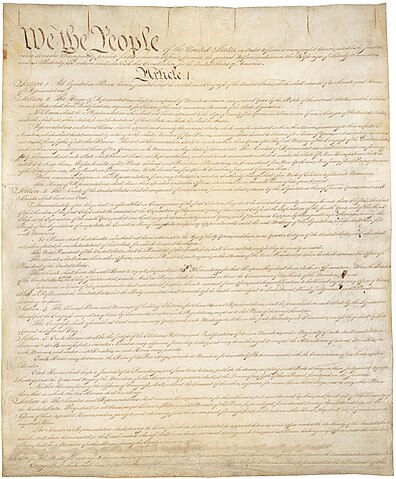
Last month I shared an article about the ruling in the Hosanna-Tabor v. EEOC case that was before the United States Supreme Court. In that particular case the Supreme Court ruled that a church had the freedom to fire an unwanted minister even if it was only for religious reasons. Those reasons are usually not valid reasons to be fired for a job but the Court realized that there is an exemption from those rules when it came to ministers in a church.
Justice Roberts wrote:
"We agree that there is such a ministerial exception. Requiring a church to accept or retain an unwanted minister, or punishing a church for failing to do so, intrudes upon more than a mere employment decision. Such action interferes with the internal governance of the church, depriving the church of control over the selection of those who will personify its beliefs."
It may seem like a very cut and dry situation but it seems that some college campuses do not think so when it comes to group membership and so far the Supreme Court has agreed. In the last two weeks the State University of New York at Buffalo and Vanderbilt University (ironically founded as a Methodist school) have told on campus Christian organizations that they cannot require their leaders to hold to their statement of faith. According to a World Magazine article:
"The student-led governing board (at SUNY Buffalo) put InterVarsity on suspension in December, after someone complained that one of the group's leaders felt pressured to resign his position because he was gay. Senate members voted to lift the suspension temporarily so that the group could meet to revise its constitution, approving at the same time a new fiscal suspension that prevents InterVarsity from spending any of its $6,000 student activity fee budget.
"A lawyer advising the Senate told the students that InterVarsity could not, under the U.S. Constitution, require its leaders to agree to any statement of faith or beliefs. But the most recent U.S. Supreme Court decision on campus religious groups - CLS v. Martinez - only forbade statement of faith requirements if a school had an "all-comers" policy, which would require all groups to be open to all people."
The Supreme Court has ruled that if a school has an "all-comers" policy then no requirements can be placed upon any group. It seems a bit hypocritical to allow churches to have a religious belief exemption when it came to who they hired and fired but not allowing campus ministry groups to do the same. But there are deeper ramifications for these types of policies. They cut both ways as a wnd.com article points out:
"Now a similar rule is being implemented on the campus of Vanderbilt University. But this time a Christian professor is pointing out that under the same rule, Christians would be allowed to join an organization of atheists or Muslims and exert influence.
"(Carol) Swain (Professor of Political Law at Vanderbilt) said that the university has put itself in an awkward position. If officials say that Christians cannot join an LGBT or Muslim group they will be in violation of their own policy. But allowing Christians to join these groups means they can effect change in their agendas."
But so far Vanderbilt has not put it's policy in writing and has even been contradictory as to what the policy is going to include:
"According to Justin Gunther, president of Christian Legal Society at Vanderbilt, a member of the administration said in public that if members of a Christian group were to use religious motivation as a basis for not voting for an officer, it would be in violation of the university’s policy.
"The statement contradicted statements made that evening by (Provost Richard) McCarty who said members could use any criteria they wanted when voting, as long as everyone was given an opportunity to run for the position."
What will be interesting is to see how these rules by the various universities look in their final form. There will undoubtedly be some legal ramifications as well. But the most telling aspect of this is Vanderbilt Provost McCarty's statement that faith views should not be imposed upon others. Of course that rule doesn't apply to the University or it's Provost. They are free to impose their faith views however they see fit.
Saturday, February 04, 2012
An Irresponsible Use of Scripture
Without getting too bogged down in the politics of the matter, I found this video taking President Obama to task over his Biblical exegesis to be very good. We can run into all sorts of problems when we take verses out of their context. And I think that what President Obama is advocating is exactly the opposite of what this verse is saying.
I want to step aside from the debate of what the church is supposed to be doing in the world for a minute. It is a very worthwhile debate to have but just outside of the scope of the application of this particular passage. The President is quoting Luke 12:48 which is a part of the passage of Luke 12:35-48. The passage is not about what we are supposed to be doing as the church rather it is talking about the way that we are supposed to be doing it. The passage is a warning to us about taking the easy way out. We are supposed to be working hard doing the things that we are supposed to be doing as the church. I would argue that passing any of our duties off to the government would be taking the easy way out and is exactly the type of thing that this passage is warning against. So if one wants to argue that taking care of the poor is a part of the duty of the church passing the buck (literally or figuratively) to an organization that is very inefficient at doing so is probably not what this passage is telling us to do.
I do find it interesting that President Obama didn't quote Matthew 25:29 which comes at the end of the Parable of the Talents which is all about how we use our resources:
"For to everyone who has will more be given, and he will have an abundance. But from the one who has not, even what he has will be taken away."
But of course that verse wouldn't be making the political point that President Obama was trying to make.
Scripture quotations are from The Holy Bible, English Standard Version® (ESV®), copyright © 2001 by Crossway, a publishing ministry of Good News Publishers. Used by permission. All rights reserved.
Thursday, January 12, 2012
Religious Freedom and the Supreme Court
The Supreme Court made a big ruling yesterday regarding religious freedom. The case of Hosanna-Tabor v. EEOC may go a long way in protecting the religious freedom of churches and para-church groups to choose their own ministers. From a Christianity Today article on the ruling:
"The First Amendment provides, in part, that 'Congress shall make no law respecting an establishment of religion, or prohibiting the free exercise thereof,'" Chief Justice John Roberts wrote in the unanimous opinion. "We have said that these two Clauses 'often exert conflicting pressures,' and that there can be 'internal tension … between the Establishment Clause and the Free Exercise Clause.' Not so here. Both Religion Clauses bar the government from interfering with the decision of a religious group to fire one of its ministers."
The court was unequivocal: "We agree that there is such a ministerial exception," Roberts wrote. "Requiring a church to accept or retain an unwanted minister, or punishing a church for failing to do so, intrudes upon more than a mere employment decision. Such action interferes with the internal governance of the church, depriving the church of control over the selection of those who will personify its beliefs."
Imposing unwanted ministers and telling religious organizations who they can hire and fire violates both religion clauses of the First Amendment, the court said. It violates the free exercise of religion because a religious group has the "group's right to shape its own faith and mission through its appointments." And it violates the establishment clause because it gives "the state the power to determine which individuals will minister to the faithful."
"It is not just a spectacular win on multiple issues and with multiple (indeed, all) justices on board, but it is the Court's sweeping language that is so very important," said Carl Esbeck, a law professor at the University of Missouri. "The words in the various justices' opinions ring out like a Liberty Bell for religious freedom. Already I can envision scores of legal briefs being churned out in the future mining the Court's passages reaffirming religious freedom as the First Freedom of the Republic. Of cardinal importance: the Supreme Court relied on the Establishment Clause as well as the Free Exercise Clause as a fountainhead of religious freedom—a contended point until now."
The case may have wide ranging religious freedom implications. I will be interesting to see how things start to play out in the future. I highly commend reading the full Christianity Today article.
Wednesday, November 09, 2011
#Occupy Zimbabwe
The irony of the Occupy Wall Street (and other iterations) has been well documented. They decry Wall Street and Corporations yet are more than willing to film and promote their actions using iPhones (made by the biggest corporation in the world), computers and other forms of technology. Up to now I have hesitated to tackle this topic but I just read an excellent blog post by Frank Turk of the Pyromaniacs blog.
Mr. Turk writes an "Open Letter" to the Occupy movement that does a great job of pointing out just how inconsistent–and silly–the movement is when you consider the wealth of the poorest parts of America with the rest of the world. He even uses data and graphs to back up his point. This one is particularly good:

The circles show the income levels and life expectancy of different countries. America is way up on the far upper right of the graph which means that we are rich and healthy compared to the rest of the world. The black line is our "poverty" line. 80% of all Americans live above that black line. Compared to the rest of the world we are rich...really rich.
Mr. Turk goes on to call this movement exactly what it is. It is not about any injustice. It is about greed.
That's right: the problem is not that "they" are greedy - whoever "they" are (the bankers, the capitalists, the stock traders, but apparently not the movie moguls, the actors, the politicians and pop stars) -- but that we are greedy. We want things we didn't earn, and we can't imagine that we might have to live on less than we think we are entitled to. We certainly couldn't live on what the average Englishman lived on in1800, and may God forbid we have to live on what the average Russian or South African lives on today. There was a time when we would say it isn't "fair", but today we say it's actually an injustice -- as if "justice" has anything to do with us getting something we didn't actually earn.
The one thing that Mr. Turk does at this point of the letter is to subtly change from writing to the protesters (using the language of "I" and "you") to writing to all of us in America (using the language of "we"). The greed isn't just a problem for those protestors. It is not just that they don't have all that the Jones have; the problem is for all of us.
We are all greedy. And that is sin.
We all have things that we think that we need that we really don't need. Having things and luxuries are not sinful in and of themselves.
Rather the problem is when we start to define poverty and need based upon how many luxuries one can or cannot afford.
Tuesday, October 18, 2011
Are Evangelicals Dangerous?
Albert Mohler—the president of the Southern Baptist Theological Seminary—gave his answer to the question “Are Evangelicals Dangerous?” in an article written on cnn.com.
He concludes by saying:
Above all, evangelicals are those who believe that Jesus Christ is Lord and are most concerned about telling others about Jesus. Most of America’s evangelical Christians are busy raising their children, working to support their families and investing energy in their local churches.
But over recent decades, evangelical Christians have learned that the gospel has implications for every dimension of life, including our political responsibility.
We’re dangerous only to those who want more secular voices to have a virtual monopoly in public life.
And I am sure that—if the 70+ pages of comments are any indication—people on both sides of the argument are going to hotly debate the issue. But there was something else he said that caught my attention.
The New Yorker accused Bachmann of being concerned with developing a Christian worldview, ignoring the fact that every thinking person operates out of some kind of worldview.
The idea of operating out of a worldview is something that is relatively new to me. The first time that I started to pay attention to the term was only about 10 years ago. It was one of those light bulb moments. Once I heard the notion of a worldview explained it made all the sense to me. Quite simply it is how our beliefs shape how we look at and interact with the world.
It is also interesting to note how our worldview in action does one of the best jobs of defining what we truly believe.
If Evangelical Christians do not engage in the realm of political and cultural ideas then what are we saying about our beliefs?
Let me use a non-religious example. Let’s pretend that we have discovered that the use of a gizmothingabob is very dangerous. Its danger is not always immediately apparent but their use—in the long run—is always disastrous. But the use of the gimothingabob does not just affect the individual; it also affects those that the person comes into contact with. The problem is that not everyone agrees with the threat assessment of gizmothingabobs. I, as a concerned citizen, have two basic options. I can either warn people about the use of gizmothingabobs even if they do not think the same way as me. Or, I can just keep quiet and let people use the gizmothingabobs at their own risk.
My actions either way speak to how I really view the danger of the gizmothingabobs as well as how I view other people. In the first option I view the danger as very real and people’s safety as very important. In the second option I don’t view the danger as being all that bad and I don’t view the safety of others as being as important.
The same is true when it comes to our beliefs about the implications of Christianity on life in general. If we do not allow it to shape our actions in every aspect of life then that speaks very loudly about how important we really believe our religious convictions to be. I don’t consider it a bad thing to be considered “dangerous”* by those with an opposing view point, rather I find it disturbing when those same people do not consider me to be at least a little “dangerous.”
*Just to be clear, I absolutely do not mean dangerous in an assault & battery sort of way. I mean it in the sense that those with opposing view points find my views to strongly conflict with theirs. For example I hope that an Atheist would find my views on the existence of a God to be dangerous and challenging towards their views of the non-existence of a God.
Friday, October 14, 2011
Should I vote for a Mormon?
With the political silly season quickly approaching I have seen a number of posts from an Evangelical Christian perspective regarding Mitt Romney's Mormon beliefs. There is a great debate about whether or not a Christian should vote for a Mormon. What complicates the matter is that there is also a debate about whether or not Mormons are Christians. And it is in this second debate that we hear the big "C" word:
"Mormonism is a Cult."
Unfortunately this statement is both true and false at the same time. It is important that we define our terms which include defining what we mean by "Christianity" and what we mean by "cult." Amy Hall of Stand To Reason does a great job of showing how the Church of Latter Day Saints (Mormons) and Orthodox Christians are using the same term "Christian" in two very different ways:
She goes on to detail just how different Mormonism and Christianity are on key beliefs. The views of the nature of God, Christ and man are different enough that they are obviously not the same religion.
The other term that needs to be defined is "cult." The most basic definition is "a particular system of religious worship, especially with reference to its rites and ceremonies." So every religious belief system is technically a cult. Mormonism also fits the definition of a cult in relationship to Christianity in that it differs significantly from the orthodox view. The problem is that, as Denny Burk points out, we do not usually use the term in this manner:
So it seems to me that we need to be careful about the words that we use and how we are using them. I would strongly argue that Mormonism, as much as they may protest otherwise, is not a Christian denomination or sect. However I would hesitate to use the term cult simply because of the connotations that are contained in the word.
And that brings me to my original question. Can I, as an Orthodox Evangelical Conservative Christian, vote for a Mormon?
The simple answer is yes.
First, Christianity is a religious belief system. While it does inform my political, social, economic and other views of the world, it does not require a particular person to be my national leader. It doesn't even require a particular form of government. When asked about paying taxes to the Roman government, Jesus said: "Give to Caesar what belongs to Caesar and give to God that which belongs to God." In other words there are things that fall into the realm of civil government and there are things that fall into the realm of God's kingdom. Without getting into a great debate here about what belongs in which realm, suffice it to say that they are separate from one another.
Second, our nation is not a Christian nation. We may have been founded on Judeo-Christian principles but we are not a theocracy or a religious based nation.
Given a choice, I would much rather vote for someone that was a Mormon that would uphold more of the principles that I see fitting into the overall Christian worldview on governance than for a Christian that would not.
For further reading on this debate:
The Theological and Political Errors of Pastor Jeffress
A Vote for Romney Is a Vote for the LDS Church
Mormonism 101
"Mormonism is a Cult."
Unfortunately this statement is both true and false at the same time. It is important that we define our terms which include defining what we mean by "Christianity" and what we mean by "cult." Amy Hall of Stand To Reason does a great job of showing how the Church of Latter Day Saints (Mormons) and Orthodox Christians are using the same term "Christian" in two very different ways:
The word "Christian" actually means something. It doesn't simply refer to a person who follows the ethical teachings in the New Testament, nor does it refer to everyone who uses the name "Jesus." Christianity entails an entire worldview—a particular view of God, man, salvation, purpose, heaven and hell, etc.
She goes on to detail just how different Mormonism and Christianity are on key beliefs. The views of the nature of God, Christ and man are different enough that they are obviously not the same religion.
The other term that needs to be defined is "cult." The most basic definition is "a particular system of religious worship, especially with reference to its rites and ceremonies." So every religious belief system is technically a cult. Mormonism also fits the definition of a cult in relationship to Christianity in that it differs significantly from the orthodox view. The problem is that, as Denny Burk points out, we do not usually use the term in this manner:
In popular usage, the word cult is associated with bizarre and sometimes threatening behavior (think David Koresh and Jim Jones). The term is seen as pejorative and an unfair attack when applied to groups who don’t live in exclusive communes and commit mass suicide. Most people would acknowledge, for instance, that the average Mormon cuts a different profile than a Branch Davidian.
So it seems to me that we need to be careful about the words that we use and how we are using them. I would strongly argue that Mormonism, as much as they may protest otherwise, is not a Christian denomination or sect. However I would hesitate to use the term cult simply because of the connotations that are contained in the word.
And that brings me to my original question. Can I, as an Orthodox Evangelical Conservative Christian, vote for a Mormon?
The simple answer is yes.
First, Christianity is a religious belief system. While it does inform my political, social, economic and other views of the world, it does not require a particular person to be my national leader. It doesn't even require a particular form of government. When asked about paying taxes to the Roman government, Jesus said: "Give to Caesar what belongs to Caesar and give to God that which belongs to God." In other words there are things that fall into the realm of civil government and there are things that fall into the realm of God's kingdom. Without getting into a great debate here about what belongs in which realm, suffice it to say that they are separate from one another.
Second, our nation is not a Christian nation. We may have been founded on Judeo-Christian principles but we are not a theocracy or a religious based nation.
Given a choice, I would much rather vote for someone that was a Mormon that would uphold more of the principles that I see fitting into the overall Christian worldview on governance than for a Christian that would not.
For further reading on this debate:
The Theological and Political Errors of Pastor Jeffress
A Vote for Romney Is a Vote for the LDS Church
Mormonism 101
Friday, October 07, 2011
Hank Williams, ESPN and Free Speech
Hank Williams Jr. compared President Obama to Hitler and as a result ESPN pulled William's iconic song "Are You Ready For Some Football" as the opening for Monday Night Football. I am sure that there are those that heard Williams' comments and had steam coming out of their ears, those that rolled their eyes, those that cheered, and those that simply shrugged their shoulders. I'm not going to get into a debate over the validity of Mr. Williams' comments. Suffice it to say that while I am not much of a supporter of President Obama's policies and ideas, I don't think comparing President Obama to a man that systematically eliminated millions of people based upon their race, creed, beliefs or physical/mental condition is particularly valid.
What struck me as interesting about this whole thing was Hank Williams Jr.'s response:
First of all, the First Amendment has all sorts of restrictions to it. Try claiming your right to free speech after getting arrested for joking about a bomb being on an airplane. Or try claiming your right to free speech after getting arrested for making a threatening statement to another person.
Second, ESPN did not prevent Mr. Williams from saying what he said or holding his particular view. They just decided that he is not the type of person that they want associated with their company. I would bet that most of us know that if we start bad mouthing our boss or employer in public that we will soon have nothing to complain about except being out of a job.
And that brings me to the third point. ESPN is a private company and not the government. The First Amendment specifically applies to the government of this country. Every company, private or public, can terminate someone's employment because of something that the employee said.
The First Amendment does not give us the ability to say whatever we want to say. There are limits to what can be said and it has been the responsibility of the judicial system to determine those limits. Whether or not the Supreme Court has always ruled properly on free speech cases is something that we can argue about freely.
Source of the Hank Williams Jr. quote: Sports Illustrated via The Consumerist.
What struck me as interesting about this whole thing was Hank Williams Jr.'s response:
"After reading hundreds of e-mails, I have made MY decision. By pulling my opening Oct 3rd, You (ESPN) stepped on the Toes of The First Amendment Freedom of Speech, so therefore Me, My Song, and All My Rowdy Friends are OUT OF HERE. It's been a great run."Mr. Williams is claiming that ESPN violated his free speech right and he is absolutely wrong. ESPN did no such thing.
First of all, the First Amendment has all sorts of restrictions to it. Try claiming your right to free speech after getting arrested for joking about a bomb being on an airplane. Or try claiming your right to free speech after getting arrested for making a threatening statement to another person.
Second, ESPN did not prevent Mr. Williams from saying what he said or holding his particular view. They just decided that he is not the type of person that they want associated with their company. I would bet that most of us know that if we start bad mouthing our boss or employer in public that we will soon have nothing to complain about except being out of a job.
And that brings me to the third point. ESPN is a private company and not the government. The First Amendment specifically applies to the government of this country. Every company, private or public, can terminate someone's employment because of something that the employee said.
The First Amendment does not give us the ability to say whatever we want to say. There are limits to what can be said and it has been the responsibility of the judicial system to determine those limits. Whether or not the Supreme Court has always ruled properly on free speech cases is something that we can argue about freely.
Source of the Hank Williams Jr. quote: Sports Illustrated via The Consumerist.
Wednesday, August 31, 2011
When Politics and Religion Collide
I ran across this NY Times article by Ross Douthat while reading Justin Taylor’s Blog.
It is an interesting article giving advice to journalists as they write about religious beliefs (specifically “Conservative Christianity” in this instance) when they do not share those beliefs. His four points boil down to this:
- Conservative Christianity is vast and complex with overlapping beliefs and practices. It is easy to hold up the fringe and extreme views as the “normal” views of either a political candidate or a religious movement.
- One should avoid a double standard. If you don’t think it is important to hold a Democrat’s feet to the fire for their ties to radical views then you shouldn’t turn around and say that it is important to hold a Conservative’s feet to the fire for similar ties to radical views.
- Don’t see conspiracy in movements and organizations in which you are unfamiliar. Often “code words” are not conspiracy driven code words but merely the normal everyday language of those movements and organizations.
- Republican politicians have been better at using their religious constituents than the constituents have been able to “use” the politicians. Douthat uses a great example in George W. Bush and the Federal Marriage Amendment.
I would love to simply say, “Yeah! You tell ‘em!” But I think that I need to take his advice very seriously as well.
- Liberalism is a vast and complex movement. It is easy for me to pigeonhole the whole movement as socialist but when I reflect back on my experiences with those that would self profess to be liberals often they are merely concerned for other people. They have no desire for a socialist system but rather they are trying to find a way to help those that are in need and quite often ignored. We may disagree as to why things are the way they are and the best way of fixing them, but often we both have a mutual concern for others. The disagreement frequently stems from the initial analysis as to what leads to the problem. Until we agree on this (and that day may never come) we will continue to disagree on the course of action that needs to be taken. I need to remember this whenever I engage in these conversations.
- If I want to hold Democrats to a high standard then I need to start by holding myself to either the same or an even higher standard. Then I need to move on to holding Conservative politicians to those standards. I like to think that I hold myself to those high standards but sometimes I really don’t do that good of a job.
- Even if I really do think there is a conspiracy going on, it rarely helps to jump up and down and wave my arms while yelling. How often has a real conspiracy (Area 51 notwithstanding) stayed a secret? In order to have a large conspiracy there must be a large number of people know about it. And that means the odds of someone spilling the beans gets closer and closer to 100%. How often does a crime get solved because someone couldn’t keep their mouth closed? I need to just tackle the issue head on.
- We may be a nation founded on Judeo-Christian principles but we are not and never will be a Theocracy. I have every right to argue against laws that I do not like but “Because the Bible says so” is never (nor need it be) a valid argument as to why a law needs to be changed. If I believe that I have the Truth on my side then I should be confident that a intelligent and logical argument can be made to change a certain law. If my only defense is “Because the Bible says so” then I should probably start to examine why I want that law changed.
Finally the most important thing is to handle any of these discussions with grace and civility. He who yells loudest during an argument is probably not doing well.
Tuesday, June 30, 2009
Who's Giving?
From George Barna (emphasis added):
I find that a very interesting in your face to all those liberal Democrats that want to claim that conservative Republicans are cold and calloused when it comes to helping out the poor. We just tend to think that the church might be a bit better at helping than the government.Tithing in 2007
Whether they believe in the principle of tithing or not, few Americans give away that much money. In 2007, the research revealed that just 5% of adults tithed.
Not surprisingly, some population groups were more likely than others to have given away at least ten percent of their income. Among the most generous segments were evangelicals (24% of whom tithed); conservatives (12%); people who had prayed, read the Bible and attended a church service during the past week (12%); charismatic or Pentecostal Christians (11%); and registered Republicans (10%).
Several groups also stood out as highly unlikely to tithe: people under the age of 25, atheists and agnostics, single adults who have never been married, liberals, and downscale adults. One percent or less of the people in each of those segments tithed in 2007.
Among all born again adults, 9% contributed one-tenth or more of their income.
The study also showed that Protestants were four times as likely to tithe as were Catholics (8% versus 2%, respectively).
Subscribe to:
Posts (Atom)