Showing posts with label culture. Show all posts

Wednesday, August 22, 2012

Making Heroes out of Criminals

Tim DeKay (on the left) and Matt Bomer (right)
One of the TV shows that my wife and I watch is called White Collar. Since we don't have cable we watch it via Netflix. We don't watch the normal "cops and robbers" shows like CSI; CSI: Vegas; CSI: Springfield; CSI: Antartica; CSI: Moonbase Alpha; CSI: Outback (it was the dingo); or CSI: Old Guy Pretending To Still Be Cool. We will watch the quirky ones–Psych being a good example–or even the ones that don't pretent to be reality based (CSI: Using Equipment And Techniques That Don't Really Exist Which Makes Real Law Enforcement Jobs Harder) which is where White Collar comes in.

The premise behind White Collar is "the unlikely crime-solving partnership between Neal Caffrey (Matt Bomer), a charming con man turned consultant for the FBI, and Peter Burke (Tim DeKay), the Federal Agent charged with keeping him on the right side of the law." The idea is that Caffrey's extensive background as an art thief, forger and general con man gives Agent Burke the advantage in capturing other criminals. Caffrey is released from prison and put on home arrest. He has to wear a tracking anklet except when he is working a case undercover. Then alternate means of monitoring (wearing a wire or a gps enabled watch) is used. This doesn't prevent Caffrey from getting himself into illegal situations. He has a trusty sidekick–a fellow con man that has not been convicted–named Mozzy that helps Caffrey out on the cases but also helps keep Caffrey involved in illegal activities. For the most part Agent Burke works to keep Caffrey out of trouble and even tries to catch Caffrey when he suspects Caffrey in stealing a large amount of Nazi stolen treasure.

The stolen treasure ends up playing a pivotal role when it turns out to be the ransom demand for Agent Burke's kidnapped wife. The treasure (or at least half of it) is used to draw out the kidnapper (who is an "archenemy" of Caffrey) and everything seemingly works out. The kidnapper takes credit for stealing the treasure in the first place which gets Caffrey off the hook. Burke knows that Caffrey had the treasure (which was technically stolen by Mozzy) and it becomes a point of contention between the two. It all leads up to the Season 3 finale where Caffrey has a hearing to determine whether or not his sentence is commuted. It turns out that Burke–knowing that Caffrey was involved in the stealing of the treasure and other art work–testifies that Caffrey has become a valuable asset to the FBI and good citizen who should have his commuted. Of course this testimony comes just as Caffrey is cutting his tracking anklet and making another escape.

Up to this point I thought the struggle that Caffrey was having between being a reformed criminal and reverting back to his old ways was an interesting insight into what grounds a person. The more Caffrey became rooted through friendships and his work with the FBI the less Caffrey wanted to give that up and live a life on the run. That part I understood. But the turning of Agent Burke from being honest and straight forward to someone that was willing to cover up for Caffrey because the situation was working really bothered me.

What bothered me wasn't the fact that Burke was making a pragmatic choice. We make pragmatic choices every day. When we find something that works we usually stick with it and hold to the truth of the situation. It is where we get the saying, "If it isn't broke, don't fix it." What bothered me is that the elevation of someone that we would consider a criminal to the position of hero. But it was more than that. If we look at the heroes of the Bible (particularly those of the Old Testament) they were not always good guys. They lied, cheated, murdered, committed adultery and more. Yet they were still considered heroes. They all had to face the consequences of their sins. What really bothered me about the direction of White Collar is that it was designed for the viewer to root for Caffrey to get away with it. We don't want to see Caffrey arrested and put back in jail. We want to see things somehow work out without the consequences.

Unfortunately the sacrifice that Jesus made on the cross tells us that the things we do wrong has consequences. Even when we receive forgiveness for our sins there was still a price that needed to be paid. There might not be an eternal consequence that we have to pay (there may be earthy ones) but someone still had to suffer the consequences. I think that it sets a bad tone when we start rooting for criminals (even fictional ones) to get away with their crimes. While they may escape the consequences for their crimes there is still a victim somewhere that has had their life negatively affected by the crime.


Tuesday, July 24, 2012

Just what are we teaching our young girls?

It is amazing how quickly one week away turned into three. Let me start with just a brief catch-up note. Initially I was only going to have one week away from blogging during the Fourth of July week. My wife and I usually join my family for a long weekend at the lake. So I figured that I wouldn't get much writing in. But then the week we came back I officiated over my very first wedding. It was pretty exciting because it was for one of my former youth group kids. Then I spent most of last week answering doctrinal questions on an application for a Senior Pastor position. Some of you might cringe at answering questions on Baptism, The Lord's Supper, church governance/discipline and Spiritual Gifts but once I start I sometimes have a hard time quitting. But now I am back to my regularly scheduled blog post.

Last week I came across an interesting but disturbing article entitled: Why 6-Year-Old Girls Want to Be Sexy. The article starts off with a fairly ominous statement:

"Most girls as young as 6 are already beginning to think of themselves as sex objects, according to a new study of elementary school-age kids in the Midwest."

Researchers from Knox College in Galesburg, IL showed a couple of paper dolls to girls that were between 6 and 9 years old. Both dolls were dressed in clothes that would be considered fashionable. One was dressed in a modest way and the other was dressed like a sexy Bratz doll. The results are quite disturbing:

"Across-the-board, girls chose the "sexy" doll most often. The results were significant in two categories: 68 percent of the girls said the doll looked how she wanted to look, and 72 percent said she was more popular than the non-sexy doll."

I don't know that it really is all that stunning that almost three quarters of 6 to 9-year-olds identify dressing sexy with being popular. For those that do find it surprising might I suggest a quick perusal of pop culture that includes a look at MTV. But what is interesting (and again not all that stunning when you really think about the issue) is that media consumption and desire to dress sexy is not the primary correlation that we might suppose.

"Media consumption alone didn't influence girls to prefer the sexy doll. But girls who watched a lot of TV and movies and who had mothers who reported self-objectifying tendencies, such as worrying about their clothes and appearance many times a day, in the study were more likely to say the sexy doll was popular.

"The authors suggest that the media or moms who sexualize women may predispose girls toward objectifying themselves; then, the other factor (mom or media) reinforces the messages, amplifying the effect. On the other hand, mothers who reported often using TV and movies as teaching moments about bad behaviors and unrealistic scenarios were much less likely to have daughters who said they looked like the sexy doll. The power of maternal instruction during media viewing may explain why every additional hour of TV- or movie-watching actually decreased the odds by 7 percent that a girl would choose the sexy doll as popular, Starr said. "As maternal TV instruction served as a protective factor for sexualization, it’s possible that higher media usage simply allowed for more instruction.""

The influence of a mother–for good or bad–may be one of the most important aspects of the development of young girls. The article also found that a mother's religious beliefs also positively influenced the girls but that it wasn't due to a "media blackout."

"However, girls who didn’t consume a lot of media but who had religious mothers were much more likely to say they wanted to look like the sexy doll. "This pattern of results may reflect a case of 'forbidden fruit' or reactance, whereby young girls who are overprotected from the perceived ills of media by highly religious parents … begin to idealize the forbidden due to their underexposure," the authors wrote. Another possibility is that mothers of girls who displayed sexualized attitudes and behaviors had responded by restricting the amount of TV and movies their daughters could watch. Regardless, the authors underlined, "low media consumption is not a silver bullet" against early self-sexualization in girls."

What seems to be the most important aspect is when a mother takes the time to teach their daughters about what they encounter in both media and popular culture. It is important for parents to understand and explain the problems that come with the sexual objectification of women with their daughters even at a young age. This isn't a new idea and is how God designed the parent/child relationship to work. Proverbs 22:6 says:

"Train up a child in the way he should go; even when he is old he will not depart from it."

For good or bad what parents teach their children will be even more powerful than anything that pop culture, the media or anyone else tries to teach your children. The only time that those other voices will have a bigger impact is when parents–through both their actions and inaction–"teach" their children need to learn from someone else.


Scripture quotations are from The Holy Bible, English Standard Version® (ESV®), copyright © 2001 by Crossway, a publishing ministry of Good News Publishers. Used by permission. All rights reserved.


Wednesday, May 02, 2012

24 Years Later

The Huffington Post has just acquired some new amateur footage of the 1986 Challenger Space Shuttle disaster. The footage is interesting in that it grabs the immediate reaction of the spectators.

I was in high school at the time and I still remember a classmate coming up and telling me about the explosion. I was in complete disbelief until more and more reports started coming in. This shuttle mission was different in that it included a teacher and a family friend of ours was one of the teachers that had applied for the position. I have no idea how far into the application process our friend ended up going. But it took what was a larger than life story and gave it a bit of a personal twist. It was with great interest and sadness that I watched the video and found myself moved even 24 years later.


Tuesday, April 24, 2012

Youth Fitness Specialist

I was walking to the library the other day and saw a sign that was hanging out in front of a house. It was a large banner that was an advertisement for a "Youth Fitness Specialist." Personally I had never considered the need for youth fitness specialists. I want to be right up front in saying that I realize that I am not the "physical specimen" that I was in my late 20s and early 30s. I have put on a few pounds since then and probably could benefit from a fitness specialist myself. Unfortunately some of the current statistics on child obesity say that there actually may be a need for our youth to have fitness specialists as well:

  • Approximately 17% (or 12.5 million) of children and adolescents aged 2–19 years are obese.
  • Since 1980, obesity prevalence among children and adolescents has almost tripled.
  • There are significant racial and ethnic disparities in obesity prevalence among U.S. children and adolescents. In 2007–2008, Hispanic boys, aged 2 to 19 years,were significantly more likely to be obese than non-Hispanic white boys, and non-Hispanic black girls were significantly more likely to be obese than non-Hispanic white girls.
I don't mean to get into all of the socio-economic realities that lead to certain demographic differences in obesity. I don't even want to get into any scientific or dietary reasons either. What I am about to say comes more from observation and anecdote.

My mom and dad would never have considered using a youth fitness specialists. They were youth fitness specialists. My brother and I were not allowed to watch much tv or play any video games growing up. In the summer time we were shooed out of the house. We ended up playing baseball, football, riding bikes, play in the playground and we were generally active. We just needed to be in the house before either the streetlights or our porch light came on. I remember having to hustle home more than once to avoid getting into trouble.

Far too often today when I pass by a playground it is empty. I did see one child playing in a playground as I was walking home from the library. The basketball courts by our church seem to be one of the few exceptions. There are a lot of people playing basketball although they seem to be mostly high school or older. There still are not a lot of younger kids out there playing.

What is troubling is that we have turned what should be a natural–kids outside burning up tons of energy–into a rare occasion. There are many reasons and excuses that we can give for this. But it seems that we need to do something. The health of the children of this country depend upon it.


Friday, March 16, 2012

Is El Paso limiting the free speech of Christians?

I came across this article last week and thought that it would be good to share. Apparently El Paso Mayor John Cook and some of the city council members decided to ignore a ballot initiative vote. The ballot initiative was voted on and passed which established a city ordinance limiting domestic partner benefits.

The action of the mayor and city council caused an uproar and led to recall petitions being circulated and signed. This led to further actions:

"The mayor subsequently sued Tom Brown Ministries, Word of Life Church of El Paso, El Pasoans for Traditional Family Values and other local citizens who circulated recall petitions. He cited a Texas election law, arguing that it prohibits churches from circulating a petition.

"While ADF attorneys have filed a separate federal suit against the law to have it declared unconstitutional on First Amendment grounds, a state judge denied Cook’s request to order the election halted.

"Then the Court of Appeals for the 8th District took up the mayor’s cause and ordered the election stopped and the petition signatures decertified. Almost immediately, El Paso District Attorney Jaime Esparza subpoenaed the petitions and convened a grand jury to proceed with possible criminal indictment of those behind the petition effort."

While I am not familiar with the Texas law that is in question I do know something regarding the Johnson Amendment of 1954. It wasn't always illegal for a church to engage in political speech. And technically on a federal level it is still not illegal. The only limit is a loss of tax exempt status if a church or other 501(c)(3) organization actively engages in political campaigning for or against a particular candidate. The actions of the churches circulating the recall petitions may violate the IRS tax code in question. But should they be considered criminal in nature?

That is the question that is apparently going to be decided surrounding the Texas election law and may have serious ramifications on what a church can and cannot say.

Tuesday, March 06, 2012

77% of all statistics are either misleading or made up

I heard a news story on the radio this morning that made me stop and think. The story reported that a new study showed that African-American students in the Chicago Public Schools system are more likely to receive harsher discipline than other students. The reporter went on to quote some statistics from the study. It was at this point that I paused. Did the statistics actually report what the study say they reported? Here are the statistics taken from the Chicago Tribune version of the story:

"African-American students (approximately 45 percent of students) comprised three-quarters (approximately 75 percent) of school suspensions in 2009-10, the year data was collected for the national civil rights survey. Latino students made up 42 percent of CPS' enrollment but 20 percent of the suspensions. White students, who represented less than 10 percent of district enrollment, made up 3 percent of suspensions."

Statistics showing that 45 percent of the students getting 75 percent of the punishment seems to validate the studies findings. But is that what those statistics actually tell us? Hearing a quick story on the radio or even reading a brief summary from the newspaper don't always give us all the facts. So my next step was to look at the original study to see what other factors were looked at. But unfortunately the source website is down for maintenance which means that we can only deal with the statistics at hand. So do the reported statistics actually tell us that African-American students in the CPS are more likely to receive harsher discipline than other students? Are there limitations to what statistics can tell us?

Yes there are limitations and no–as reported–the statistics do not tell us what the news reports are saying that they are telling us. Let me take a moment and be very clear. I am not commenting on whether or not African-American students are more or less likely to receive harsher discipline than their fellow students of other ethnic/racial backgrounds. My only comment is on whether or not the statistics–as reported–determine either a correlation or a causation.

In other words these statistics cannot show that African-American students are being subjected to harsher punishments because they are African-American students. The only thing that they actually show is that about 75 percent of the students that are being suspended are African-American which is a different percentage than the total population makeup of the schools. This means that African-American students are more likely to be suspended. In order to make the judgement that African-American students are being subjected to harsher punishments we would need to look at the punishments being given out for various misbehaviors.

This is one of the great problems with simply quoting statistics. We always need to look at statistics with a critical eye and ask if they are actually saying what we are being told that they are saying. Then we need to do the hard work of asking why these statistics are the way that they are. It is only then that we can get at the underlying problems.

There is no doubt in my mind that the educational system in Chicago is not functioning as best as it can. It seems to me that African-American students being more likely to be suspended is no less of an issue than African-American students being subjected to harsher discipline. The real question is why are they being suspended at a greater rate?


Friday, February 10, 2012

Should Christians remain friends with sinners?

First I must apologize for my inconsistent posting this week. I am preaching on Sunday and because I don't preach every week I am having a hard time finding the balance between sermon prep and blog writing. It is not that I haven't had the time to blog. The difficulty is separating the blogging from the sermon prep. I was fighting the urge to blog my sermon all week which would not have been good for a number of reasons. (I should be posting a video of my sermon next week.) I think that once I start serving full-time in a church and get into a routine that it won't be an issue.

On to the post.

I came across an interesting article this week from Alan Shlemon of Stand To Reason. He tackles the very thorny and controversial topic of how Christians should relate to Homosexuals. Specifically he looks at the question of whether or not Christians–specifically those that think homosexuality is a sin–should have friends that are homosexual:

"Part of the problem stems from the belief that if you keep your convictions about homosexuality, then you can’t stay in relationship with your friends and family who say they’re gay."

Shlemon notes that this is just not the Biblical way of looking at this issue:

"The New Testament doesn’t prohibit Christians from friending (I know, I know…that’s so Facebook-ish) homosexuals. Paul, writing about a sexually immoral man in 1 Corinthians 5:9-10, tells Christians that they are “not to associate with sexually immoral people— not at all meaning the people of this world who are immoral, or the greedy and swindlers, or idolaters. In that case you would have to leave this world.” Notice how Paul clarifies that we don’t have to avoid relationships with non-believers (who he calls “people of this world”). After all, we can’t influence them if we’re not involved at all."

The idea that you end a relationship with someone because they are living a life that is contrary to what the Bible teaches also goes against the way that Jesus lived his life. Part of the charge that the Pharisees made against Jesus was that he associated with "tax collectors and sinners." This doesn't mean that Jesus approved of their behavior or encouraged them to continue in it. Quite the opposite. Jesus commanded people to stop sinning. It is also good to remember that Jesus tended to be harder on the religious zealots for being hypocritical than he was on the sinner. We have to balance being true to our convictions and not being a jerk.

Mr. Shlemon goes on to explain what Paul was saying in 1 Corinthians 5:9-10:

"There is a group of people that Paul warns Christians to avoid. Continuing his discussion on sexual immorality in 1 Corinthians 5:11, Paul explains, “But now I am writing to you not to associate with anyone who bears the name of a brother if he is guilty of sexual immorality or greed, or is an idolater, reviler, drunkard, or swindler—not even to eat with such a one.” The people Paul warns us to avoid are Christians who engage in sexual immorality. Why? Because sin left unchecked within a body of believers is like cancer. It spreads and harms those around them (1 Corinthians 5:6-7).

"That doesn’t mean we are to end all relationships with Christians who have committed sexual sin. Paul is talking about unrepentant Christians. People who know the biblical standard but thumb their nose at it and continue in the illicit behavior. That’s the context of 1 Corinthians 5."

What is also included in that list of people are those that are guilty of greed, idolatry, revilers, drunks, or swindlers. Paul is telling us to avoid Christians that are willfully living disobedient lives. As Mr. Shlemon points out, these attitudes can erode our own sense of right and wrong.

Mr. Shlemon concludes by saying:

"In all other circumstances, there’s no reason to choose between your faith and your friends. Keep them both so you have a chance to be a positive influence in your relationships. That’s the point of being an ambassador for Christ."

Wednesday, February 08, 2012

Religious Freedom Revisited

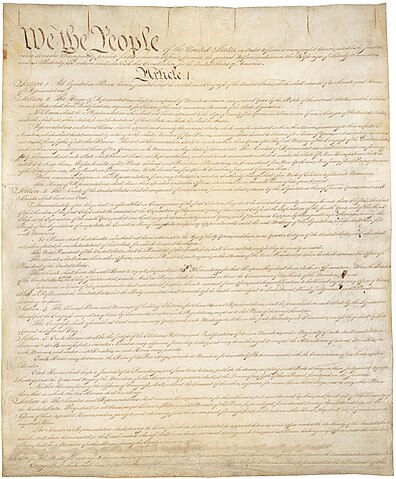
U.S. Constitution

Last month I shared an article about the ruling in the Hosanna-Tabor v. EEOC case that was before the United States Supreme Court. In that particular case the Supreme Court ruled that a church had the freedom to fire an unwanted minister even if it was only for religious reasons. Those reasons are usually not valid reasons to be fired for a job but the Court realized that there is an exemption from those rules when it came to ministers in a church.

Justice Roberts wrote:

"We agree that there is such a ministerial exception. Requiring a church to accept or retain an unwanted minister, or punishing a church for failing to do so, intrudes upon more than a mere employment decision. Such action interferes with the internal governance of the church, depriving the church of control over the selection of those who will personify its beliefs."

It may seem like a very cut and dry situation but it seems that some college campuses do not think so when it comes to group membership and so far the Supreme Court has agreed. In the last two weeks the State University of New York at Buffalo and Vanderbilt University (ironically founded as a Methodist school) have told on campus Christian organizations that they cannot require their leaders to hold to their statement of faith. According to a World Magazine article:

"The student-led governing board (at SUNY Buffalo) put InterVarsity on suspension in December, after someone complained that one of the group's leaders felt pressured to resign his position because he was gay. Senate members voted to lift the suspension temporarily so that the group could meet to revise its constitution, approving at the same time a new fiscal suspension that prevents InterVarsity from spending any of its $6,000 student activity fee budget.

"A lawyer advising the Senate told the students that InterVarsity could not, under the U.S. Constitution, require its leaders to agree to any statement of faith or beliefs. But the most recent U.S. Supreme Court decision on campus religious groups - CLS v. Martinez - only forbade statement of faith requirements if a school had an "all-comers" policy, which would require all groups to be open to all people."

The Supreme Court has ruled that if a school has an "all-comers" policy then no requirements can be placed upon any group. It seems a bit hypocritical to allow churches to have a religious belief exemption when it came to who they hired and fired but not allowing campus ministry groups to do the same. But there are deeper ramifications for these types of policies. They cut both ways as a wnd.com article points out:

"Now a similar rule is being implemented on the campus of Vanderbilt University. But this time a Christian professor is pointing out that under the same rule, Christians would be allowed to join an organization of atheists or Muslims and exert influence.

"(Carol) Swain (Professor of Political Law at Vanderbilt) said that the university has put itself in an awkward position. If officials say that Christians cannot join an LGBT or Muslim group they will be in violation of their own policy. But allowing Christians to join these groups means they can effect change in their agendas."

But so far Vanderbilt has not put it's policy in writing and has even been contradictory as to what the policy is going to include:

"According to Justin Gunther, president of Christian Legal Society at Vanderbilt, a member of the administration said in public that if members of a Christian group were to use religious motivation as a basis for not voting for an officer, it would be in violation of the university’s policy.

"The statement contradicted statements made that evening by (Provost Richard) McCarty who said members could use any criteria they wanted when voting, as long as everyone was given an opportunity to run for the position."

What will be interesting is to see how these rules by the various universities look in their final form. There will undoubtedly be some legal ramifications as well. But the most telling aspect of this is Vanderbilt Provost McCarty's statement that faith views should not be imposed upon others. Of course that rule doesn't apply to the University or it's Provost. They are free to impose their faith views however they see fit.

Friday, January 27, 2012

An Uphill Battle

This is one of those news stories that is too disturbing to ignore. While we as a nation have made great strides in racial harmony it shows just how far we still have to go. And I fear that–if world history is any indication–that we may never get there. According to the story in the Chicago Tribune:

"The three teens, who are white, allegedly put a noose around the neck of (Joshua) Merritt, who is black, and hurled racial epithets at him before one of the boys held a knife to his throat and threatened to kill him, police and Merritt said Thursday."

This isn't something that happened in the racially charged environment of the Civil Rights Movement in the South. It happened last month in the Chicago neighborhood of East Beverly. It seems that the three white teens were upset that Merritt was dating a white girl. So they lured Merritt over to one teen's house and then proceeded to engage in an activity that was assuredly meant to convey the image of a lynching. Fortunately Merritt was able to escape without any serious physical harm.

Unfortunately there is assuredly other longterm harm that has been done. There is longterm harm that has been done to Merritt and to other within the minority community as well. Lynchings were not designed to just punish one person. They are meant to send a message to a whole group of people. It is also unfortunate that while it is a shocking and surprising story, it really isn't nearly as surprising as it should be.

I find it interesting that only one of the three teens was charged as an adult. They were all charged with very serious crimes and this cannot be merely passed off as teen boys being teen boys. This crossed a line. The two younger teens (16 and 17 years old) are old enough to know that they crossed that line and not by a little bit. Although I have to admit that I am not a legal expert and do not fully know what the difference will be for those two young men being charged as juveniles rather than adults.

The other thing that I find interesting is that all three are charged with committing a "hate crime." I understand what is meant by the term "hate crime" but I have always felt that it is a very poor term. All crime comes from some sort of hate. In fact all crimes comes from some sort of prejudice as well–a love of self that is far greater than a love for others. In this case the crime was allegedly* motivated by the fact that the three white teens disapproved of the behavior of Merritt simply because he was not white. And anytime a crime is committed for this type of reason we have a very serious problem.

The very heart of the problem is that there is a problem with the heart. We can make laws that make racially or other prejudicially motivated decisions illegal. We can create educational programs that work towards teaching others about these issues. We can do all sorts of things to try and right these wrongs. But we cannot get into someone's heart. We cannot make these changes for someone. We see racially motivated crimes and wars happening all around the world. Some of them have been going on for thousands and thousands of years. And this is why this particular crime isn't as surprising as I would hope it to be.

There is a young man with hopes and dreams that now has to deal with something that no one regardless of age, race or creed should ever have to deal with. While we can deal swiftly and harshly with the men that put a literal noose around this young man's neck, this story is a reminder that dealing with the figurative noose is still a longterm and uphill battle.


*I use the term allegedly not to convey any doubt about whether or not I believe that these crimes were racial in nature. I have no doubt that they were. Rather I use the term because they have not yet been convicted in a court of law.

Monday, January 23, 2012

Are Cool Celebrity Christians good for Christianity?

I came across this article on the Fox News website a couple of weeks ago. The headline asks what can be considered a fairly provocative question. "Are young, religious stars like Justin Bieber and Tim Tebow making Christianity cool?" The intro to the article chronicles how Justin Bieber, Demi Lovato and Tim Tebow have all been in the news lately regarding their Christian faith. Author Jo Piazza then asks the question:

"So are these young, hip and very public Christians in the worlds of music, television and sports are making it cool for the highly connected Generation Z to embrace Christianity?"

It strikes me that this question–while it may be a valid question–makes two categorical mistakes about Christianity. The first is that celebrities might be good for Christianity in general. The second is that Christianity needs to be perceived as cool in order to be embraced–particularly by young people.

Celebrity Christians create a complex set of issues. First celebrity status is so fleeting so those that are popular today can quickly fade into oblivion. On top of that the news cycle today is so short that we usually do not get much more than soundbites from people. This means that complex thoughts and belief systems are distilled down into just a few sentences at most and sometimes end up being just a phrase or two. Then there is the "sensational news sells" mentality that is pervasive in our culture. It is far bigger news when a celebrity couple goes through an ugly divorce than the existence of Mr. and Mrs. Average's happy marriage. What this then means is that it is far bigger news when a Celebrity Christian stumbles than if they continue to live a solid life. The sordid details of a stumbling Celebrity Christian are shared far and wide while the repentance and restitution details are either ignored or viewed skepticism.

I don't share this as a complaint against the state of the media; that is a completely different post. I share this because it isn't a matter of if a Christian is going to stumble. It is only a matter of when. We all make mistakes. Being a Christian doesn't mean being mistake free rather it means that our mistakes are forgiven in the eyes of God. It also means that we should be taking steps to correct our mistakes and quite often those corrections come over a long period of time. Unless we are a close personal friend, we never observe Celebrity Christians on a personal level over a long period of time. 

While Tim Tebow sounds like a great guy that is living an authentic life (I really don't know much about Justin Bieber or Demi Lovato), we should not really be holding him up as an example of how to live a Christian life. That role should be left for those that we observe on a daily or weekly basis. It is far more important to watch someone going through the ups and downs of life and handling them well. It is far more powerful to watch someone go through the long process of getting up, dusting off and walking again after they have made a mistake than to observe a Celebrity Christian for a short period of time. It is far more powerful to watch someone endure a period of suffering and pain only to come out stronger on the other side than it is to watch a sports figure point to the sky after a great play.

Christianity is not about being cool enough to be acceptable for young people. There may be those that decide to investigate Christianity because some celebrity said it is what they do. But the staying power of Christianity will not come from a cool factor it will come from everyday people living lives that are obviously transformed by their faith in Christ. Without that authenticity, young people will only be around until the next cool thing takes hold. And in this day and age then next cool thing won't be too far away.

Thursday, January 12, 2012

Religious Freedom and the Supreme Court

The Supreme Court made a big ruling yesterday regarding religious freedom. The case of Hosanna-Tabor v. EEOC may go a long way in protecting the religious freedom of churches and para-church groups to choose their own ministers. From a Christianity Today article on the ruling:

"The First Amendment provides, in part, that 'Congress shall make no law respecting an establishment of religion, or prohibiting the free exercise thereof,'" Chief Justice John Roberts wrote in the unanimous opinion. "We have said that these two Clauses 'often exert conflicting pressures,' and that there can be 'internal tension … between the Establishment Clause and the Free Exercise Clause.' Not so here. Both Religion Clauses bar the government from interfering with the decision of a religious group to fire one of its ministers."

The court was unequivocal: "We agree that there is such a ministerial exception," Roberts wrote. "Requiring a church to accept or retain an unwanted minister, or punishing a church for failing to do so, intrudes upon more than a mere employment decision. Such action interferes with the internal governance of the church, depriving the church of control over the selection of those who will personify its beliefs."

Imposing unwanted ministers and telling religious organizations who they can hire and fire violates both religion clauses of the First Amendment, the court said. It violates the free exercise of religion because a religious group has the "group's right to shape its own faith and mission through its appointments." And it violates the establishment clause because it gives "the state the power to determine which individuals will minister to the faithful."

"It is not just a spectacular win on multiple issues and with multiple (indeed, all) justices on board, but it is the Court's sweeping language that is so very important," said Carl Esbeck, a law professor at the University of Missouri. "The words in the various justices' opinions ring out like a Liberty Bell for religious freedom. Already I can envision scores of legal briefs being churned out in the future mining the Court's passages reaffirming religious freedom as the First Freedom of the Republic. Of cardinal importance: the Supreme Court relied on the Establishment Clause as well as the Free Exercise Clause as a fountainhead of religious freedom—a contended point until now."

The case may have wide ranging religious freedom implications. I will be interesting to see how things start to play out in the future. I highly commend reading the full Christianity Today article.

Monday, November 28, 2011

Lessons to be learned from Twilight: Breaking Dawn Part 1

Disclaimer: This post deals with a mature but essential subject matter. It is not something that we as Christians can just hope won't affect our children.

I am not a movie critic nor do I play one on TV. I am also not a Twilight expert. I have not read any of the books and I have only seen two of the movies. Having only seen two of the movies (the last two) means that I have been sufficiently lost as to the major plot line. Which means that my general observations of the movies have been limited to the following:

  • It is about two guys fighting over one girl (not sure if that one has been done before);
  • The guy who plays Edward is sort of creepy looking (I see why they picked him to play a vampire);
  • The name Bella in this story seems contrived and very out of place (I found myself getting annoyed by it);
  • The guy who plays the werewolf is always looking to go shirtless in the cold and rainy weather of the Northwest (which led to the best line of either of the movies that I have seen: "Doesn't he own a shirt?");
  • It is easy to recognize that the movies were written for teen girls (and I would assume the same is true for the books as well).
Twilight is your typical teen angst love story wrapped in the thin candy shell of vampires and werewolves. My goal is not to review the overall content of Twilight or its inherent glorification and worship of mythical creatures that subsist on sucking the very life-blood out of people and were universally feared and reviled until somewhat recently. Rather I would like to focus on a couple of scenes from the most recent film installment.

Both my wife and I were appalled at the intensity and explicitness of the sex scenes. They were explicit without being graphic. There was no nudity but not much was left to the imagination either. As an aside it occurs to me that adding a sex scene to a movie is a very unimaginative and uncreative way of telling a story. This is a movie that is aimed at teen girls and the inclusion of these scenes move this film at least into the category of erotica and may even qualify as pornography.*

I am not naive enough to think that this movie breaks any ground in exposing teens to sex. I realize that basic cable (and sometimes even network TV) shows just as much as what was shown in Twilight. However whether or not our kids can see these things is not the right question. The real question is whether or not our kids (and us adults as well) should see these things.

The other important issue surrounds the idea of where our kids learn about sex. We as Christians cannot allow culture and media to be the lone voice when it comes to these issues. We also should not be doing "cleanup work." Our job is not to correct what our kids learn from these sources. Rather our kids should have learned enough from us first that they can start to recognize when they are being exposed to the wrong view of sex. When they hear at school that a condom is the best way to prevent an STD or pregnancy their reaction should be to think, "Well that's just silly. I have an even lower risk of an STD or pregnancy if I wait to have sex until marriage."  

There are two lessons that we can learn from the latest Twilight movie. The first is the absolute importance of parents taking the time to view any movies that their children want to see. And the second is taking the time to be the primary educational source for all of life's lessons. Even the difficult ones like sex.


*Erotica is generally defined as sexually implicit material designed to illicit an emotional response while pornography is defined as being designed to illicit a sexual response. However I don't know that there is any real difference in that the emotional responses aroused in erotica are going to be very closely tied to a sexual response. It doesn't seem possible to completely divorce the two. 

Wednesday, November 02, 2011

How Should Christians Think About Halloween?

Should Christians celebrate Halloween? It's another one of those questions that will have Christians taking all sides. There will be vehement assertions one way or the other as well as those that simply say "meh..." I have usually approached it from a theological standpoint regarding both the explicit and implicit messages contained within. And usually while I am not generally opposed to the holiday there are certain things that are being glorified within the holiday that I strongly dislike.

That being said, I came across a very different take from one of my fellow seminary graduates. Jeremy Dowsett, pastor of Blacksoil, approached the holiday from an angle that I had not considered. His view is from the social aspects provided by Halloween that have been quickly disappearing in our society:

Our culture is almost completely devoid of spaces where it is socially appropriate to interact with neighbors. The evenings of sitting on front porches, talking with whoever is out for a walk have been replaced with evenings scanning the 300 channels of cable or running on the treadmill listening to an ipod. I don’t even live in an “attached garage” community, and the only people I ever see outside are kids and moms calling kids to come inside.

Halloween is the one day of the year that it’s not only appropriate, it’s actually expected you will go onto your neighbors porches and interact with your neighbors. Not only that, but their is some remnant of generosity and hospitality in this ritual. People are actually giving gifts to strangers and expecting nothing in return (albeit gifts loaded with high fructose corn syrup, but hey its something).

The neighborhood streets near our church were absolutely filled–comparatively speaking–with kids and parents Halloween afternoon. In the past, when I lived in a house where I would actually get trick-or-treaters, it was one of the very few times that I would interact with people from the neighborhood. And I would often sit on my front stoop in the evenings.

Yes there are things about Halloween that are the antithesis of the Christian faith. It has the tendency to glorify demons, vampires and witches which all stem from the evil side of the scale. But there are also aspects of Christmas and Easter which, when we dig deep enough, have their root in things that also tend from that same evil side. But as Christians we have had no problem overlooking them in order to "redeem" those holidays.

Pastor Dowsett goes on to say:

Now why on this one day of the year that’s brimming with potential for meeting and blessing people Christians want to take themselves out of their neighborhoods and do “safe” activities with their kids at some church building somewhere else is beyond me. In theological lingo, Halloween is full of missional potential.

There seems to be this trend that I have observed in many Christian circles where we want to insulate ourselves from evil rather than separate from it. Just before going to the cross Jesus prayed:

I have given them (the Disciples) your word, and the world has hated them because they are not of the world, just as I am not of the world. I do not ask that you take them out of the world, but that you keep them from the evil one. They are not of the world, just as I am not of the world.

We are not supposed to try and insulate ourselves form all things evil. Jesus asked the Father to protect us from evil while we are interacting with the world. Halloween is an excellent example where we can interact with the world while shunning the less savory parts of the holiday. It is a good opportunity to interact with people that we may otherwise never interact with.

Tuesday, October 18, 2011

Are Evangelicals Dangerous?


Albert Mohler—the president of the Southern Baptist Theological Seminary—gave his answer to the question “Are Evangelicals Dangerous?” in an article written on cnn.com.

He concludes by saying:

Above all, evangelicals are those who believe that Jesus Christ is Lord and are most concerned about telling others about Jesus. Most of America’s evangelical Christians are busy raising their children, working to support their families and investing energy in their local churches.
But over recent decades, evangelical Christians have learned that the gospel has implications for every dimension of life, including our political responsibility.
We’re dangerous only to those who want more secular voices to have a virtual monopoly in public life.

And I am sure that—if the 70+ pages of comments are any indication—people on both sides of the argument are going to hotly debate the issue. But there was something else he said that caught my attention.

The New Yorker accused Bachmann of being concerned with developing a Christian worldview, ignoring the fact that every thinking person operates out of some kind of worldview.

The idea of operating out of a worldview is something that is relatively new to me. The first time that I started to pay attention to the term was only about 10 years ago. It was one of those light bulb moments. Once I heard the notion of a worldview explained it made all the sense to me. Quite simply it is how our beliefs shape how we look at and interact with the world.

It is also interesting to note how our worldview in action does one of the best jobs of defining what we truly believe.

If Evangelical Christians do not engage in the realm of political and cultural ideas then what are we saying about our beliefs?

Let me use a non-religious example. Let’s pretend that we have discovered that the use of a gizmothingabob is very dangerous. Its danger is not always immediately apparent but their use—in the long run—is always disastrous. But the use of the gimothingabob does not just affect the individual; it also affects those that the person comes into contact with. The problem is that not everyone agrees with the threat assessment of gizmothingabobs. I, as a concerned citizen, have two basic options. I can either warn people about the use of gizmothingabobs even if they do not think the same way as me. Or, I can just keep quiet and let people use the gizmothingabobs at their own risk.

My actions either way speak to how I really view the danger of the gizmothingabobs as well as how I view other people.  In the first option I view the danger as very real and people’s safety as very important. In the second option I don’t view the danger as being all that bad and I don’t view the safety of others as being as important.

The same is true when it comes to our beliefs about the implications of Christianity on life in general. If we do not allow it to shape our actions in every aspect of life then that speaks very loudly about how important we really believe our religious convictions to be. I don’t consider it a bad thing to be considered “dangerous”* by those with an opposing view point, rather I find it disturbing when those same people do not consider me to be at least a little “dangerous.”

*Just to be clear, I absolutely do not mean dangerous in an assault & battery sort of way. I mean it in the sense that those with opposing view points find my views to strongly conflict with theirs. For example I hope that an Atheist would find my views on the existence of a God to be dangerous and challenging towards their views of the non-existence of a God.

Friday, October 14, 2011

Should I vote for a Mormon?

With the political silly season quickly approaching I have seen a number of posts from an Evangelical Christian perspective regarding Mitt Romney's Mormon beliefs. There is a great debate about whether or not a Christian should vote for a Mormon. What complicates the matter is that there is also a debate about whether or not Mormons are Christians. And it is in this second debate that we hear the big "C" word:

"Mormonism is a Cult."

Unfortunately this statement is both true and false at the same time. It is important that we define our terms which include defining what we mean by "Christianity" and what we mean by "cult." Amy Hall of Stand To Reason does a great job of showing how the Church of Latter Day Saints (Mormons) and Orthodox Christians are using the same term "Christian" in two very different ways:

The word "Christian" actually means something. It doesn't simply refer to a person who follows the ethical teachings in the New Testament, nor does it refer to everyone who uses the name "Jesus." Christianity entails an entire worldview—a particular view of God, man, salvation, purpose, heaven and hell, etc.

She goes on to detail just how different Mormonism and Christianity are on key beliefs. The views of the nature of God, Christ and man are different enough that they are obviously not the same religion.

The other term that needs to be defined is "cult." The most basic definition is "a particular system of religious worship, especially with reference to its rites and ceremonies." So every religious belief system is technically a cult. Mormonism also fits the definition of a cult in relationship to Christianity in that it differs significantly from the orthodox view. The problem is that, as Denny Burk points out, we do not usually use the term in this manner:

In popular usage, the word cult is associated with bizarre and sometimes threatening behavior (think David Koresh and Jim Jones). The term is seen as pejorative and an unfair attack when applied to groups who don’t live in exclusive communes and commit mass suicide. Most people would acknowledge, for instance, that the average Mormon cuts a different profile than a Branch Davidian.

So it seems to me that we need to be careful about the words that we use and how we are using them. I would strongly argue that Mormonism, as much as they may protest otherwise, is not a Christian denomination or sect. However I would hesitate to use the term cult simply because of the connotations that are contained in the word.

And that brings me to my original question. Can I, as an Orthodox Evangelical Conservative Christian, vote for a Mormon?

The simple answer is yes.

First, Christianity is a religious belief system. While it does inform my political, social, economic and other views of the world, it does not require a particular person to be my national leader. It doesn't even require a particular form of government. When asked about paying taxes to the Roman government, Jesus said: "Give to Caesar what belongs to Caesar and give to God that which belongs to God." In other words there are things that fall into the realm of civil government and there are things that fall into the realm of God's kingdom. Without getting into a great debate here about what belongs in which realm, suffice it to say that they are separate from one another.

Second, our nation is not a Christian nation. We may have been founded on Judeo-Christian principles but we are not a theocracy or a religious based nation.

Given a choice, I would much rather vote for someone that was a Mormon that would uphold more of the principles that I see fitting into the overall Christian worldview on governance than for a Christian that would not.


For further reading on this debate:
The Theological and Political Errors of Pastor Jeffress
A Vote for Romney Is a Vote for the LDS Church
Mormonism 101

Tuesday, October 11, 2011

I Want To Be Like...

There was a catchy little tune that those of us growing up sports fans in Chicago in the 90s will remember. Actually I am guessing that you will remember it even if you didn't grow up in Chicago or were that big of a sports fan.


It is a really catchy tune that was designed to sell Gatorade. That song popped in mind when I saw an article stating that St. Croix had sold out of their $175 black mock turtle necks.


Whuh? Yikes. I don't know that I would spend $175 on a mock turtle neck regardless who wore the same style. Spending that type of money on a phone that he helped design and market? Maybe so.


St. Croix via The Consumerist

Friday, October 07, 2011

Hank Williams, ESPN and Free Speech

Hank Williams Jr. compared President Obama to Hitler and as a result ESPN pulled William's iconic song "Are You Ready For Some Football" as the opening for Monday Night Football. I am sure that there are those that heard Williams' comments and had steam coming out of their ears, those that rolled their eyes, those that cheered, and those that simply shrugged their shoulders. I'm not going to get into a debate over the validity of Mr. Williams' comments. Suffice it to say that while I am not much of a supporter of President Obama's policies and ideas, I don't think comparing President Obama to a man that systematically eliminated millions of people based upon their race, creed, beliefs or physical/mental condition is particularly valid.

What struck me as interesting about this whole thing was Hank Williams Jr.'s response:
"After reading hundreds of e-mails, I have made MY decision. By pulling my opening Oct 3rd, You (ESPN) stepped on the Toes of The First Amendment Freedom of Speech, so therefore Me, My Song, and All My Rowdy Friends are OUT OF HERE. It's been a great run."
Mr. Williams is claiming that ESPN violated his free speech right and he is absolutely wrong. ESPN did no such thing.

First of all, the First Amendment has all sorts of restrictions to it. Try claiming your right to free speech after getting arrested for joking about a bomb being on an airplane. Or try claiming your right to free speech after getting arrested for making a threatening statement to another person.

Second, ESPN did not prevent Mr. Williams from saying what he said or holding his particular view. They just decided that he is not the type of person that they want associated with their company. I would bet that most of us know that if we start bad mouthing our boss or employer in public that we will soon have nothing to complain about except being out of a job.

And that brings me to the third point. ESPN is a private company and not the government. The First Amendment specifically applies to the government of this country. Every company, private or public, can terminate someone's employment because of something that the employee said.

The First Amendment does not give us the ability to say whatever we want to say. There are limits to what can be said and it has been the responsibility of the judicial system to determine those limits. Whether or not the Supreme Court has always ruled properly on free speech cases is something that we can argue about freely.


Source of the Hank Williams Jr. quote: Sports Illustrated via The Consumerist.

Thursday, October 06, 2011

The Ignorance of Westboro on Steve Jobs

Disclaimer: I had absolutely no intention of blogging about Steve Jobs today. I figured that there would be enough chatter on the web that I wouldn't have to add to it. Just to clarify, this post is about judging others wrapped in the thin candy shell of Steve Jobs.

I came home from our midweek service at church last night to find out that Steve Jobs, former CEO and Co-Founder of Apple, had passed away. My first thought – after the shock of his passing – was to marvel at his timing even in death. He was the ultimate showman in terms of his keynote speeches that introduced a new technology. He wasn’t flashy or boisterous. Rather he had a great sense of timing that increased the desire and anticipation of a new product. So his passing after new Apple CEO Tim Cook introduced the new iPhone struck me as just another example of Jobs not wanting to upstage the product. I get the sense that he knew that people were never really that interested in him at those keynote speeches but rather the product was the star of the show.

Fast forward to this morning…I came across a posting from the website Big Government that was detailing how Westboro Baptist Church is going to picket Steve Job’s funeral and the irony of posting their intentions on Twitter via an iPhone app.

I don’t want to spend too much time on the irony but it is worth taking a moment to simply enjoy it…


I also don’t like giving Westboro any publicity. (They tend to get enough already through their inane actions.) But there is a mistake in their theology that is evident within this simple post.

Steve Jobs, as far as I know, was a Buddhist and not a Christian. So to be upset at him for not giving Glory to God is silly. To be upset with him because he “taught sin” is silly.

Let me explain.

A fundamental belief of Christianity is that we are all sinners and are all guilty. 1 John 1:10 states: “If we say we have not sinned, we make him a liar, and his word is not in us.” We are all sinners and this includes all Christians…even those at Westboro.  Paul states in Romans 3:10-20 that no one is righteous and no one seeks God. We don’t give God glory on our own. And in a certain sense we all “teach sin.” It is only because of the work of God that followers of God even attempt to give glory to God and to teach anything other than sin. So why would we expect those that do not follow God to give him any glory?

In 1 Corinthians 5 we see Paul condemning the Corinthian church for allowing a member of the congregation to have a sexual relationship with his stepmother. He goes on to say in verses 9-13: 
“I wrote to you in my letter not to associate with sexually immoral people—not at all meaning the sexually immoral of this world, or the greedy and swindlers, or idolaters, since then you would need to go out of the world. But now I am writing you to not associate with anyone who bears the name of brother if he is guilty of sexual immorality or greed, or is an idolater, reviler, drunkard, or swindler—not even to eat with such a one. For what have I to do with judging outsiders? Is it not those inside the church whom you are to judge? God judges those outside. Purge the evil person from among you.”
Paul is stating that we should not judge those outside the church by the same standard that we judge those inside the church. We should have absolutely no expectation that a non-Christian would live up to the religious standards of Christianity. 

Update: I changed the title to be more accurate as to what I was trying to convey. While one might argue that certain actions are idiotic, my post is more about pointing out the ignorance of Westboro's theology in this matter. I also apologize to the people of Westboro Baptist Church for the inflammatory nature of my title. While I strongly disagree with Westboro's actions in many cases, my intention here was merely to correct a misunderstanding of theology.

Further Reading:


Scripture quotations are from The Holy Bible, English Standard Version® (ESV®), copyright © 2001 by Crossway, a publishing ministry of Good News Publishers. Used by permission. All rights reserved.

Thursday, September 01, 2011

The Great Theologian Bill Cosby


As I was reading the story of Noah in Genesis 6-7 this morning it initially felt somewhat incomplete. Where was the part where Noah didn’t know what an Ark was? Where was the part where Noah asked God what a cubit was? Of course if you have ever heard Bill Cosby’s Noah routine you know exactly what I am talking about. Now I have nothing bad to say about Mr. Cosby’s comedy; I have often pictured other scenes of the Bible in a very similar way. In fact we have the story of one of Gideon’s conversation with God that could very easily have been a Cosby skit. What I find interesting is that I know that Cosby’s material is not in the Bible but to a certain extent it still colored my reading.

I remember reading reviews of the Veggie Tale movie Jonah that question the Biblical accuracy of the closing act of the Jonah part of the movie. (I really tried to find one of the reviews to link here but that was almost 10 years ago.) The movie goes into the part of the story where Jonah sits outside the city of Ninevah and waits for it to be destroyed. When God spares the city, Jonah gets mad at God. But that part of the story is not always told when it comes to kids versions of Jonah and the Whale. I remember reading it as an adult in amazement.

I must admit that I find how our current culture and ideas shape my reading of the Bible to be interesting. And it is something that I need to always be aware of.

If you haven’t seen (or seen it in a while) the Bill Cosby’s Noah it is worth the watch. It is also worth the watch just to see a very young Bill Cosby.

Wednesday, August 31, 2011

When Politics and Religion Collide

I ran across this NY Times article by Ross Douthat while reading Justin Taylor’s Blog.

It is an interesting article giving advice to journalists as they write about religious beliefs (specifically “Conservative Christianity” in this instance) when they do not share those beliefs. His four points boil down to this:

  1. Conservative Christianity is vast and complex with overlapping beliefs and practices. It is easy to hold up the fringe and extreme views as the “normal” views of either a political candidate or a religious movement.
  2. One should avoid a double standard. If you don’t think it is important to hold a Democrat’s feet to the fire for their ties to radical views then you shouldn’t turn around and say that it is important to hold a Conservative’s feet to the fire for similar ties to radical views.
  3. Don’t see conspiracy in movements and organizations in which you are unfamiliar. Often “code words” are not conspiracy driven code words but merely the normal everyday language of those movements and organizations.
  4. Republican politicians have been better at using their religious constituents than the constituents have been able to “use” the politicians. Douthat uses a great example in George W. Bush and the Federal Marriage Amendment.

I would love to simply say, “Yeah! You tell ‘em!” But I think that I need to take his advice very seriously as well.

  1. Liberalism is a vast and complex movement. It is easy for me to pigeonhole the whole movement as socialist but when I reflect back on my experiences with those that would self profess to be liberals often they are merely concerned for other people. They have no desire for a socialist system but rather they are trying to find a way to help those that are in need and quite often ignored. We may disagree as to why things are the way they are and the best way of fixing them, but often we both have a mutual concern for others. The disagreement frequently stems from the initial analysis as to what leads to the problem. Until we agree on this (and that day may never come) we will continue to disagree on the course of action that needs to be taken. I need to remember this whenever I engage in these conversations.
  2. If I want to hold Democrats to a high standard then I need to start by holding myself to either the same or an even higher standard. Then I need to move on to holding Conservative politicians to those standards. I like to think that I hold myself to those high standards but sometimes I really don’t do that good of a job.
  3. Even if I really do think there is a conspiracy going on, it rarely helps to jump up and down and wave my arms while yelling. How often has a real conspiracy (Area 51 notwithstanding) stayed a secret? In order to have a large conspiracy there must be a large number of people know about it. And that means the odds of someone spilling the beans gets closer and closer to 100%. How often does a crime get solved because someone couldn’t keep their mouth closed? I need to just tackle the issue head on.
  4. We may be a nation founded on Judeo-Christian principles but we are not and never will be a Theocracy. I have every right to argue against laws that I do not like but “Because the Bible says so” is never (nor need it be) a valid argument as to why a law needs to be changed. If I believe that I have the Truth on my side then I should be confident that a intelligent and logical argument can be made to change a certain law. If my only defense is “Because the Bible says so” then I should probably start to examine why I want that law changed.

Finally the most important thing is to handle any of these discussions with grace and civility. He who yells loudest during an argument is probably not doing well.